How AI Improves Cold Email Automation

Cold emails in 2025 require precision and personalization to stand out. AI makes this possible by automating tasks like lead research, email crafting, and deliverability tracking, saving time while increasing engagement.
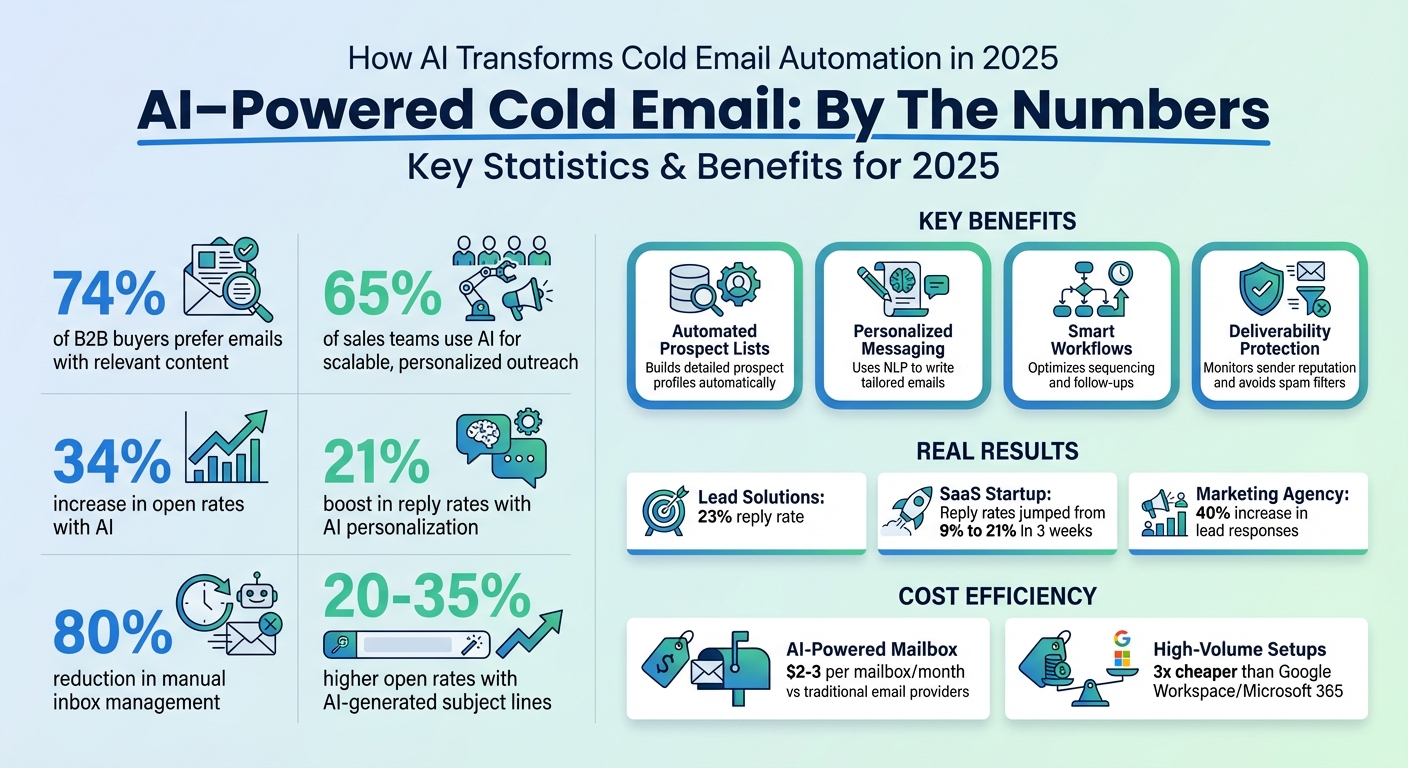
- 74% of B2B buyers prefer emails with relevant content.
- 65% of sales teams use AI for scalable, personalized outreach.
- AI boosts open rates by 34% and reply rates by up to 21%.
Key benefits of AI in cold email automation:
- Builds detailed prospect lists automatically.
- Writes tailored messages using natural language processing.
- Optimizes workflows with smart sequencing and follow-ups.
- Monitors sender reputation and email health to avoid spam filters.
With tools like Mailforge, setting up domains, mailboxes, and DNS records takes minutes, ensuring your infrastructure supports high-volume campaigns. AI transforms cold email strategies, helping businesses scale outreach while maintaining a human touch.
AI Cold Email Automation Statistics and Key Benefits 2025
Building an AI-Compatible Cold Email Infrastructure
To make the most of AI for personalization, workflow automation, and email deliverability, you need a strong and scalable email infrastructure. This isn't just about setting up a few email accounts - it’s about creating a distributed system that supports large-scale outreach while protecting your sender reputation. Here's how to set up the foundation for AI-powered cold email campaigns.
Setting Up Domains and Mailboxes for AI Automation
One of the most common mistakes teams make when scaling AI-driven email outreach is relying on a single domain for all communications. Using multiple domains and mailboxes is crucial. Distributing your email volume across several inboxes mimics natural email behavior, reducing the risk of being flagged as spam. Plus, if one domain encounters deliverability issues, your entire campaign won’t come to a standstill.
For example, if you’re reaching out to 10,000 prospects each month, and you stick to a safe limit of 50–100 emails per mailbox per day, you’ll need dozens of mailboxes spread across multiple domains. Setting up these domains manually - registering them, creating mailboxes, and configuring DNS records - can be a tedious process. Tools like Mailforge streamline this by automating the setup of hundreds of domains and mailboxes in just minutes, complete with DNS configuration, SSL, and domain masking.
"We needed to build an outbound motion that didn't break as we scaled - and Mailforge gave us that foundation."
- Isabella L., Founder of Let's Fearlessly Grow
Configuring DNS and Authentication Records
If you want your AI-personalized emails to land in inboxes rather than spam folders, setting up SPF, DKIM, and DMARC records is non-negotiable. These authentication protocols verify to email providers like Gmail and Outlook that your emails are legitimate, not spoofed or spam. Without them, even the most well-crafted AI-generated content can go straight to the junk folder.
Manually configuring SPF, DKIM, and DMARC for multiple domains can be a slow and error-prone process. For 20, 50, or even 100 domains, this could take days and introduce a significant risk of mistakes - errors that could tank your deliverability rates.
Mailforge simplifies this process by automating DNS configuration as soon as you add a domain. It instantly sets up SPF, DKIM, DMARC, and custom tracking domains according to the latest industry standards. What typically takes hours can be done in under 10 minutes per domain, eliminating the risk of human error. This seamless setup ensures your AI workflows can rely on accurate, real-time deliverability data, which is essential for optimizing send times and strategies. With this technical foundation in place, the next step is connecting your sending tools to your infrastructure.
Connecting Sending Tools to Your Infrastructure
Once your domains and mailboxes are ready, it’s time to integrate your AI sending platform - such as Salesforge - with your email infrastructure. This is where all the pieces come together: AI sequences, personalization logic, and follow-up workflows operate on top of the robust system you’ve built.
Start with 50–100 emails per mailbox daily, gradually increasing to 150–200 as the mailboxes warm up over a few weeks. Use automatic mailbox rotation to distribute emails across all inboxes, ensuring no single mailbox gets overworked. Set your sending times to align with U.S. business hours (8:00 a.m. to 5:00 p.m. in your prospect’s time zone) to mimic natural email patterns.
Mailforge’s infrastructure works with any sending software, connecting via standard SMTP or API endpoints. Once integrated, your AI tool can leverage all warmed mailboxes, rotate sends intelligently, and monitor key metrics like bounce rates and spam complaints. This setup enables AI-driven workflows, such as those powered by Agent Frank, to handle thousands of personalized emails daily without manual intervention.
There’s also a cost advantage. At just $2 to $3 per mailbox per month, Mailforge is about three times cheaper than Google Workspace or Microsoft 365 for a setup involving 200 mailboxes.
Using AI to Personalize Cold Email Campaigns
Once your infrastructure is set up, the next step is leveraging AI to personalize your outreach efforts at scale. This section dives into how AI can enhance your campaigns through lead enrichment, dynamic templates, and tone refinement. It goes beyond simply addressing recipients by name - it integrates details like job roles, company context, and recent events to make your emails feel tailored and relevant. Let’s explore how AI can enrich lead data and supercharge your email campaigns.
AI-Powered Lead Research and Enrichment
AI tools can automatically create detailed profiles for your leads by pulling data from sources like LinkedIn, company websites, press releases, and funding databases. These tools gather information such as job roles, company size, industry, tools they use, and specific trigger events like funding rounds, hiring surges, or new office openings. Platforms like Leadsforge make this process seamless, enriching your lead list with firmographic and behavioral data in just minutes. They can even populate fields like {{custom_intro}}, {{recent_event}}, or {{primary_pain}} directly into your CRM or email platform.
Here’s a practical approach: Start by defining your ideal customer profile - say, a VP of Sales at a U.S.-based SaaS company with 50–500 employees. Then, enrich your leads with detailed, role-specific, and event-based data. Finally, sync this enriched data into your email tool so you can deliver highly personalized messages at scale.
Creating AI-Ready Email Templates
AI-ready templates are designed to separate fixed elements from dynamic, personalized content. These templates use clearly labeled variables and conditional logic to adapt to different recipients. A typical structure might include:
- A personalized opener using {{custom_intro}}, based on the recipient’s role or a recent event.
- A one-sentence problem statement, optionally referencing variables like {{role}}, {{industry}}, or {{recent_event}}.
- A short, outcome-driven pitch highlighting one or two key benefits.
- A simple, tailored call-to-action tied to the recipient’s role.
For U.S. audiences, keep emails concise - aim for 60–120 words total, with one to two sentences per paragraph. Provide clear style guidelines, such as "use plain English, avoid hype, and skip exclamation marks." To keep your emails engaging, create multiple AI-generated variants for subject lines and openers. Conditional logic allows a single template to serve multiple audience segments by swapping in role- or context-specific blocks. For example, you might focus on strategic outcomes for CEOs while emphasizing pipeline metrics for Sales Directors.
Once your templates are in place, AI can help fine-tune their tone and structure for maximum impact.
Adjusting Tone and Structure with AI
For U.S. recipients, emails should strike a balance between professionalism and approachability. Effective prompts for AI tools include instructions like "professional but conversational, avoid slang, steer clear of clichés, and don’t exaggerate." AI can also adjust tone based on the recipient’s seniority or role - C-suite executives may prefer emails that highlight strategic outcomes and risk management, while VPs or Directors might respond better to messages that blend strategy with execution, focusing on KPIs or team efficiency.
The results speak for themselves. Companies using AI-generated subject lines have reported a 34% boost in open rates. In one case study, switching to AI-personalized intros - referencing events like funding rounds or executive hires - doubled reply rates, jumping from 9% to 21% in just three weeks. This led to a significant increase in demo bookings.
Automating Workflows and Follow-Ups with AI
AI is revolutionizing cold email workflows, turning them into flexible systems that respond to real-time prospect behavior. By analyzing actions like email opens, clicks, and replies, AI can adjust follow-ups dynamically. For instance, if someone opens an email but doesn’t reply, AI might send a concise follow-up within 24 hours. On the other hand, if prospects stay silent after multiple emails, the system might tweak the messaging or pause the sequence temporarily to avoid overwhelming them. This responsive strategy sets the stage for more advanced sequencing techniques.
AI-Powered Sequencing and Branching Logic
Modern AI platforms shine when it comes to creating multi-step sequences that adapt based on recipient behavior. If someone opens an email but doesn’t respond, AI can schedule a personalized follow-up at the perfect time, using data from previous engagement trends. If a recipient replies, the system halts the sequence and directs the conversation to a sales rep immediately. AI also learns from past campaigns, refining elements like send times, subject lines, and email cadence. HubSpot’s 2023 benchmark data highlights this advantage, showing that AI-generated subject lines can boost open rates by 20–35% compared to those written by humans.
Intent Detection and Inbox Management
Using natural language processing, AI can categorize responses into positive (e.g., interest in a demo), neutral (like general inquiries), or negative (such as objections). Each category triggers specific actions: positive replies are routed to sales reps with scheduling links, objections pause the sequence and add contacts to a suppression list, and out-of-office replies are rescheduled for follow-ups. Centralized inbox views, powered by AI, pull together responses from multiple accounts, prioritizing high-intent leads while cutting manual inbox management by up to 80%. For example, one marketing agency saw a 40% increase in lead responses by using behavior-driven adjustments for categorization and routing. These efficiencies pave the way for even more streamlined outreach processes.
AI SDR Workflows with Agent Frank
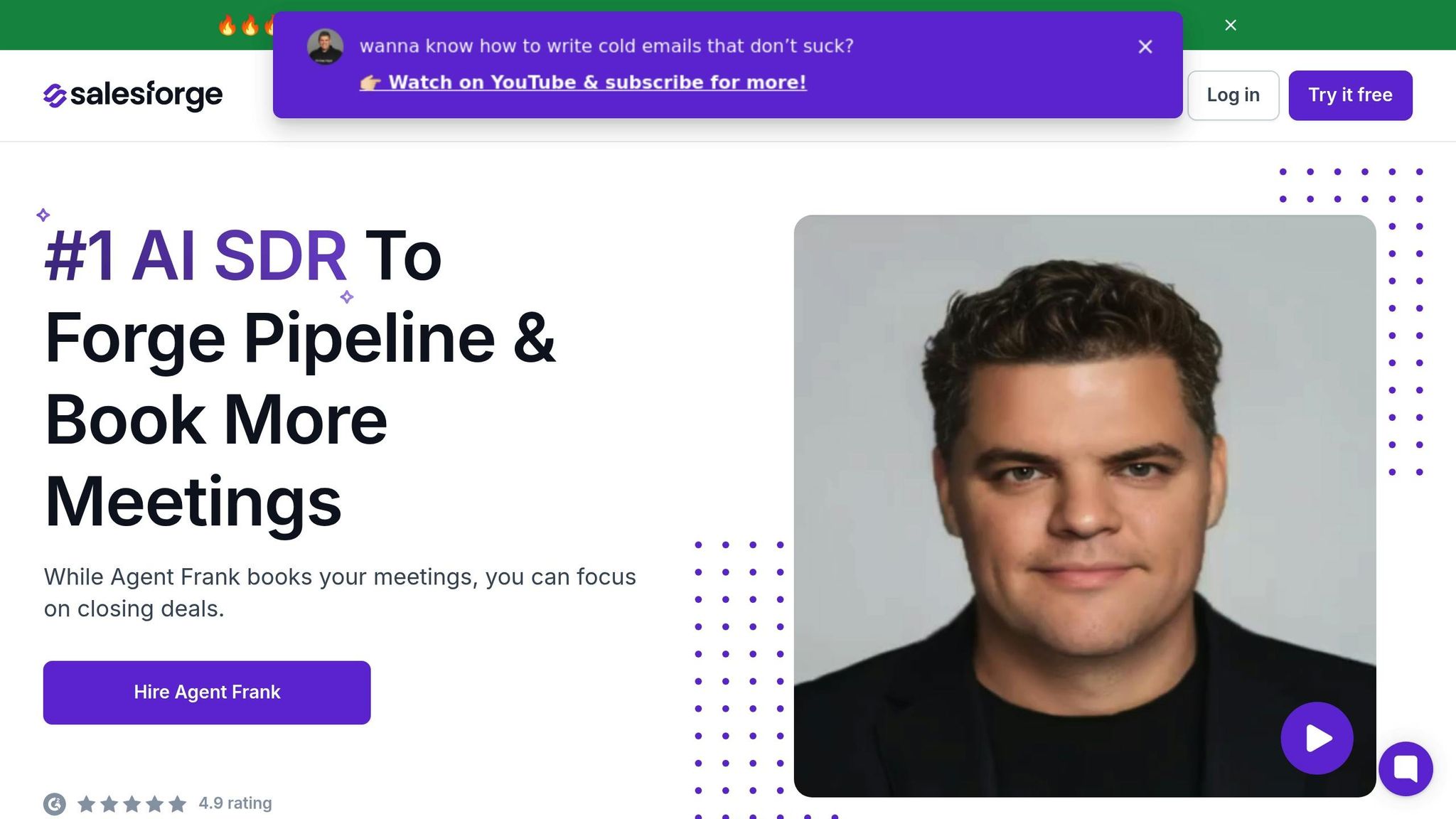
Building on these AI capabilities, Agent Frank takes automation to the next level by handling the entire SDR process autonomously. This fully automated AI SDR system uses tools like Leadsforge to source leads, sets up multi-step email sequences, monitors replies, and even schedules meetings - all without human input. When prospects engage, Agent Frank pauses sequences, replies to emails, and books meetings directly on your calendar. By eliminating manual tasks like email verification, response tracking, and follow-up management, this closed-loop workflow lets your team focus on closing deals instead of administrative tasks.
Improving Deliverability with AI
Once you've optimized personalization and workflows, the next big step is ensuring your emails actually make it to the inbox. Even the most engaging email campaigns won't matter if they get lost in spam folders. This is where AI steps in, continuously keeping tabs on sender reputation, email content, and sending practices. Instead of relying on manual monitoring, AI analyzes critical metrics and makes adjustments in real-time to protect your sender reputation and improve deliverability.
Monitoring Domain and Mailbox Health
AI tools keep a close watch on key metrics like bounce rates, spam complaints, open rates, and inbox placement across all your domains and mailboxes. For instance, platforms like Warmforge conduct automated placement tests by sending sample emails to seed lists on major providers like Gmail and Outlook. These tests reveal whether your emails land in the primary inbox, promotions tab, or dreaded spam folder. If performance metrics take a hit - like hard bounce rates climbing above 2% - AI sends alerts and can even pause campaigns on affected mailboxes to prevent further harm.
For businesses managing hundreds of domains through platforms like Mailforge, AI provides centralized oversight. It monitors your entire email infrastructure, flags underperforming domains, and prioritizes stronger ones for key campaigns. This eliminates the hassle of manual checks and ensures you're always sending from accounts with solid reputations.
AI-Based Deliverability Optimization
AI doesn't just monitor performance - it actively improves it. By adjusting sending patterns to mimic natural email activity, AI helps bypass spam filters. Instead of blasting out massive email batches all at once, AI-powered warmup features gradually increase sending volume based on engagement data. For example, a new domain might start with a small daily volume and scale up over weeks, building a positive sender reputation along the way. If performance on a particular mailbox starts to dip, the system can reduce its workload or shift campaigns to healthier alternatives.
Mailbox rotation is another game-changer. AI distributes campaigns across multiple inboxes and domains, ensuring no single sender exceeds safe volume limits. It dynamically selects which mailboxes to use for each batch based on health scores, engagement trends, and ISP-specific data. This approach not only maintains safe thresholds but also allows you to scale your campaigns without risking deliverability.
Content Quality Checks with AI
Before your emails go out, AI scans the content for potential red flags like spam triggers, broken links, or compliance issues. It identifies risky elements such as phrases like "free money", too many links, mentions of blacklisted domains, or missing unsubscribe options that could violate CAN-SPAM rules. Technical issues like malformed HTML, broken URLs, or non-loading images are also flagged.
But AI doesn’t just highlight problems - it offers solutions. It might suggest tweaks like rephrasing subject lines or reducing link density and can even run A/B tests to find the most effective content. When paired with platforms like Mailforge, these pre-send checks happen automatically across all domains, ensuring every email meets deliverability standards before it’s sent.
Conclusion
AI has reshaped the way cold emails are handled, making processes like prospect research, personalized copywriting, follow-ups, and deliverability monitoring lightning-fast. This translates into higher reply rates, improved inbox placement, and the ability to scale outreach without overwhelming your team - or risking your domains. In fact, Salesforce reports that 65% of sales teams now use AI to personalize cold outreach at scale. Companies leveraging AI-generated subject lines have seen open rates jump by approximately 34% on average.
But here’s the catch: this efficiency hinges on having a solid email infrastructure in place. AI tools can only perform their magic if supported by properly configured domains, authenticated mailboxes, and systems capable of managing large volumes without triggering spam filters. Tools like Mailforge simplify this process by automating DNS setup, managing hundreds (or even thousands) of mailboxes in just minutes, and ensuring top-tier deliverability across your email ecosystem. Automated DNS configuration not only slashes setup time but also trims costs, as highlighted in.
The numbers back this up. For example, Lead Solutions utilized AI-powered personalization and achieved an impressive 23% reply rate from their cold outreach efforts. Similarly, a mid-stage SaaS startup using Apollo AI boosted reply rates from 9% to 21% in just three weeks and doubled their demo bookings by referencing timely details like recent funding rounds and executive hires. These kinds of results are only possible when AI tools are paired with infrastructure specifically designed for cold email success.
FAQs
How does AI enhance email deliverability for cold outreach campaigns?
AI plays a crucial role in improving email deliverability for cold outreach by simplifying technical processes like DNS configuration - including DMARC, SPF, and DKIM. These setups help strengthen sender reputation and reduce the likelihood of emails being marked as spam. Additionally, AI uses advanced algorithms to analyze and adjust sending patterns, ensuring emails consistently land in inboxes rather than getting lost in spam folders.
Tools like Mailforge take this a step further by offering features such as domain masking, SSL encryption, and automated infrastructure setup. These capabilities make it easier to scale outreach campaigns while maintaining strong email performance and reliability.
How does AI make cold emails more personalized?
AI takes cold email personalization to the next level by diving into recipient data - like job titles, industries, and past interactions - to craft messages that feel relevant and customized. This approach not only grabs attention but also builds trust and increases the likelihood of getting a response.
What’s more, AI automates this entire process, ensuring businesses can deliver consistent, high-quality, personalized emails on a large scale. By blending efficiency with a personal touch, AI can dramatically enhance how your audience engages with your outreach efforts.
Why should you use multiple domains for AI-powered cold email outreach?
Using several domains for AI-driven cold email outreach is a smart way to keep your deliverability rates high and safeguard your sender reputation. By distributing your campaigns across multiple domains, you minimize the chances of one domain being flagged or blacklisted, which could otherwise derail your outreach strategy.
On top of that, managing multiple domains helps you compartmentalize different campaigns. This makes tracking performance and fine-tuning your approach much simpler. It’s a practical way to ensure your email system stays dependable and ready to scale as your outreach efforts expand.