Hypertide is an automated cold email infrastructure platform that provisions Google, Microsoft, and Entra mailboxes with tenant separation and pre-configured SPF, DKIM, and DMARC. It positions itself as the fast setup option for high-volume outbound teams.
But if you are looking for a Hypertide alternative, I do not blame you. This is not about personality or taste. It is about picking mailbox infrastructure that can actually carry your outbound at scale without breaking your deliverability the moment volume goes up.
The pattern I see across G2 threads and Reddit is consistent. Teams are hitting concentration risk on a single ESP, running into thin support windows when things go wrong, and getting stuck without a free trial to validate performance before committing.
This guide covers the 5 Hypertide alternatives worth looking at in 2026. I compared them on mailbox type, IP quality, setup speed, pricing, and how they handle bulk management for agencies. By the end, you will know which one fits your volume and which one to skip.
Let's get into it.
Not every mailbox provider is built for the same job. Here is the framework I used to compare each tool.
The tool should give you real infrastructure, not aliased SMTP or EDU workarounds that break when policies change. Whether that infrastructure is a shared-IP domain pool or a real Google or Microsoft mailbox depends on your budget and prospect base.
I looked at whether IPs were shared, dedicated, or rotated, and where they were geographically hosted. IP quality directly affects inbox placement, so this is not a spec you can skip.
Fast setup matters when you are provisioning dozens of domains. Every tool here automates SPF, DKIM, and DMARC, but the time from signup to first send ranges from 5 minutes to 72 hours.
I compared per-mailbox cost, minimum purchases, and annual discounts. Some tools price by volume tier, others by workspace plan, and the effective cost varies a lot at scale.
Agencies and high-volume teams need bulk DNS updates, multi-workspace organization, and API access. I flagged which tools handle this natively versus which require manual work.
For a deeper look at what infrastructure to build around these mailboxes, I recommend reading up on email infrastructure fundamentals first.
Here is the full breakdown, ranked by how well each tool solves the problems Hypertide users are complaining about.
Mailforge is the best Hypertide alternative because it delivers cold email infrastructure at $2 to $3 per mailbox with a 5-minute setup, which is faster and cheaper than what Hypertide charges for its Google inboxes. It runs on a shared-IP model built specifically for cost-effective volume sending.
What makes it stand out as a Hypertide competitor is the price-to-scale ratio. Hypertide charges $3.30 per Google inbox with no annual discount disclosed. Mailforge sits at $2 to $3 per mailbox with roughly 2 months free on annual billing, which changes the math significantly at 100+ mailboxes.
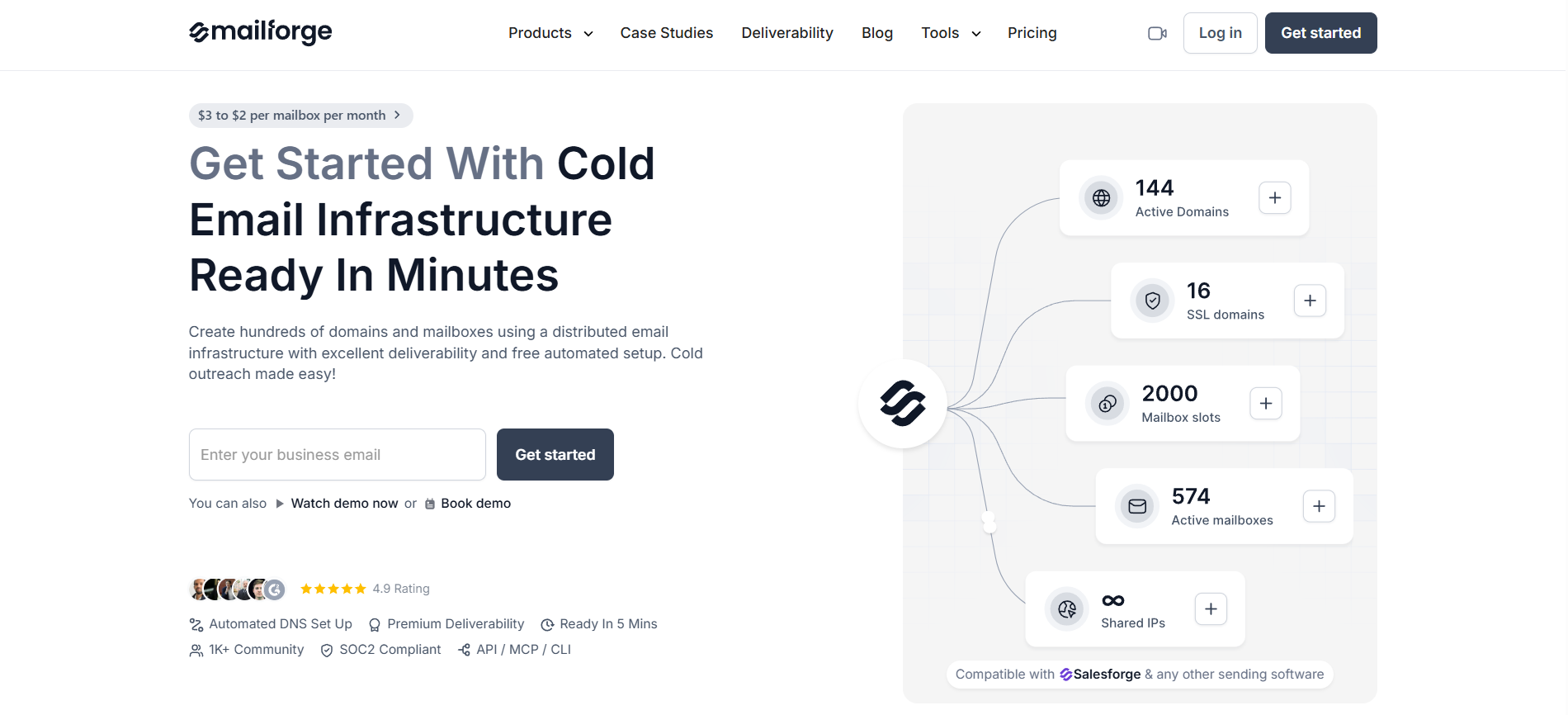
DNS setup is fully automated with SPF, DKIM, and DMARC configured out of the box. Domains and mailboxes come pre-warmed. Bulk DNS updates, multi-workspace management, and API, MCP, and CLI access make it usable for agencies running multiple client pods from one dashboard.
The G2 validation is the strongest sign for me. Mailforge sits at 4.67 stars across 92 reviews, which is far more independent signal than Hypertide's zero reviews. Named case studies with metrics from AKOOL, UniteSync, and SalesCaptain give you real performance benchmarks to reference.
Another Hypertide alternative worth serious consideration is Primeforge. It sits in the same Forge stack as Mailforge but takes a completely different angle by providing real Google Workspace and Microsoft 365 mailboxes on US IPs.
Where it beats Hypertide as a competitor is ESP-matching. If your prospects sit on Google Workspace, sending from a real Google mailbox on a US IP improves inbox placement compared to shared SMTP or Entra-only infrastructure. Same logic for Microsoft 365 prospects. Primeforge covers both without the Microsoft concentration risk that Hypertide carries.
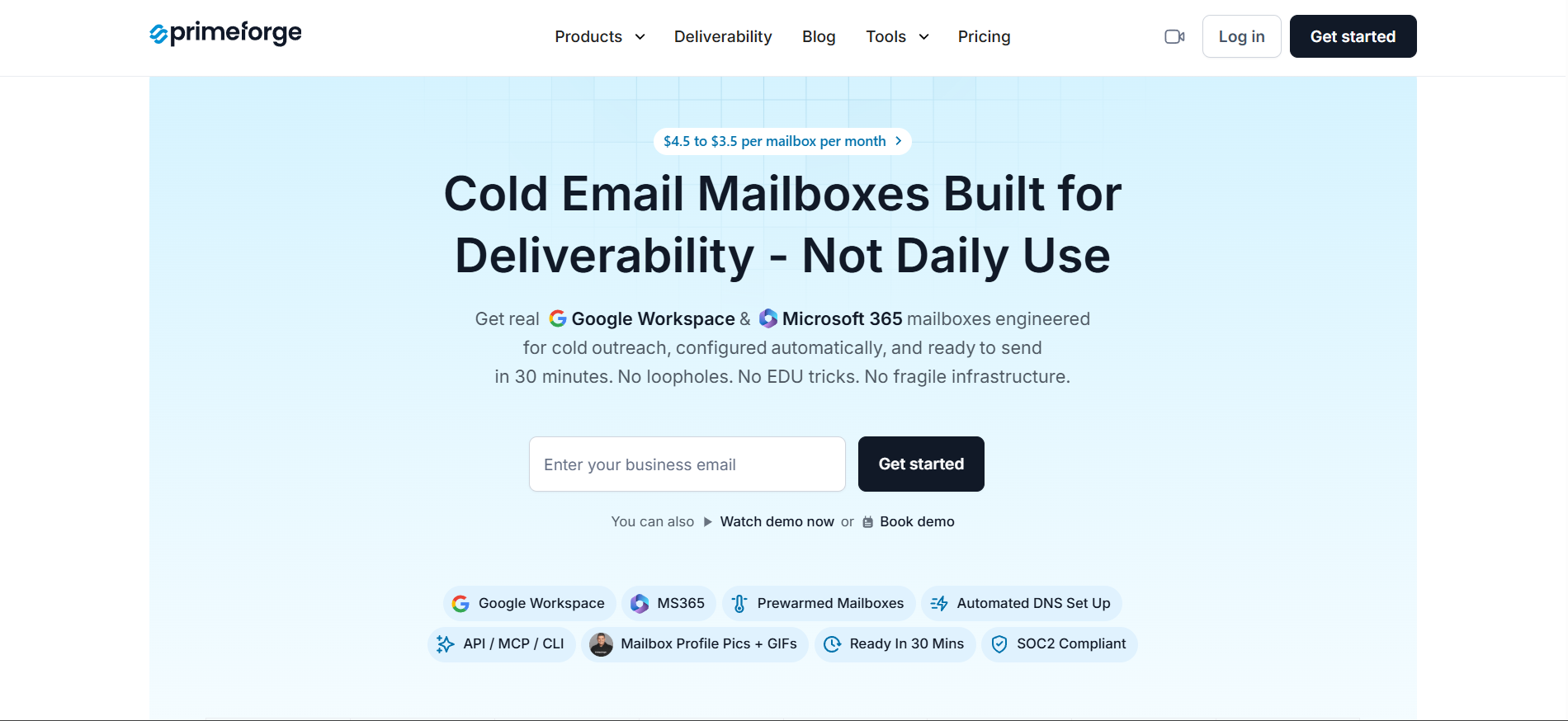
The DNS setup is fully automated with SPF, DKIM, and DMARC configured out of the box. Mailboxes come pre-warmed with profile pictures and GIFs already set up. Bulk DNS updates and multiple workspaces make it usable for agencies managing several clients from one dashboard.
Across G2 reviews and case studies from teams like Outbound Pros, VidLab7, and Comligo, the consistent theme is inbox placement and setup ease. The 4.5-star rating across 21 reviews is a thin sample but directionally strong. For a deeper walkthrough of how it holds up in production, my Primeforge review covers the full setup and sending experience.
Puzzle Inbox is another Hypertide alternative that shows up often in agency conversations. It focuses on pre-warmed Google Workspace and Microsoft Outlook 365 inboxes with a done-for-you setup delivered within 24 to 72 hours.
Where it differs from Hypertide is the dual-platform approach and the pricing spread on the Outlook side. Google inboxes start at $3 for the standard tier and $4.50 for pre-warmed, while Outlook 365 pricing starts as low as $0.35 per inbox according to the homepage. That is an aggressive Outlook price point if your campaigns skew toward Microsoft-side prospects.
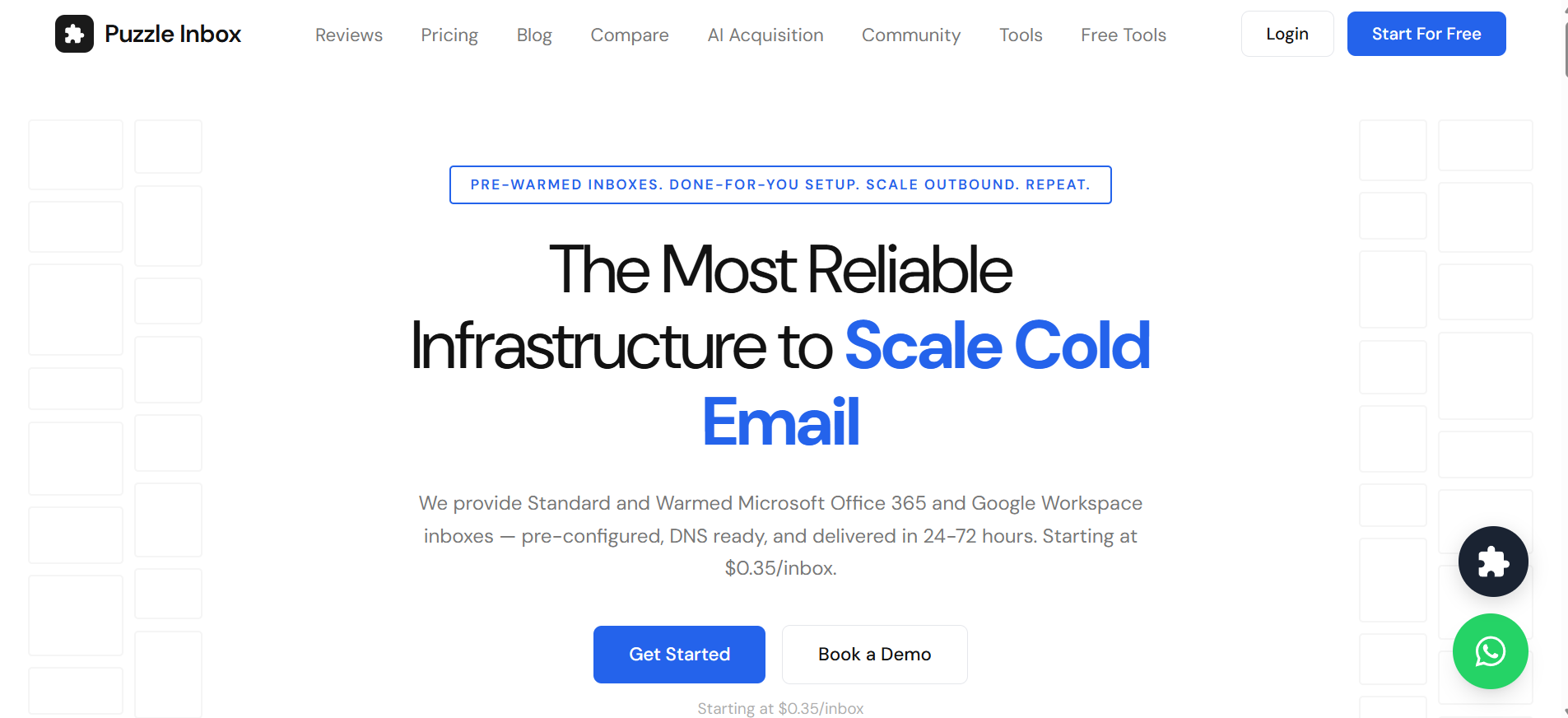
Puzzle Inbox claims to use authentic Google Workspace and Microsoft 365 tenants rather than shared subaccounts or aliased SMTP. Support is delivered over WhatsApp, which some agency operators love and others find informal for infrastructure work.
The G2 presence is thin with only 1 review at time of research, so the on-site 4.7 rating should be treated with caution. It works for agencies scaling bulk sending pods, but validation from independent reviews is limited compared to more established Hypertide competitors.
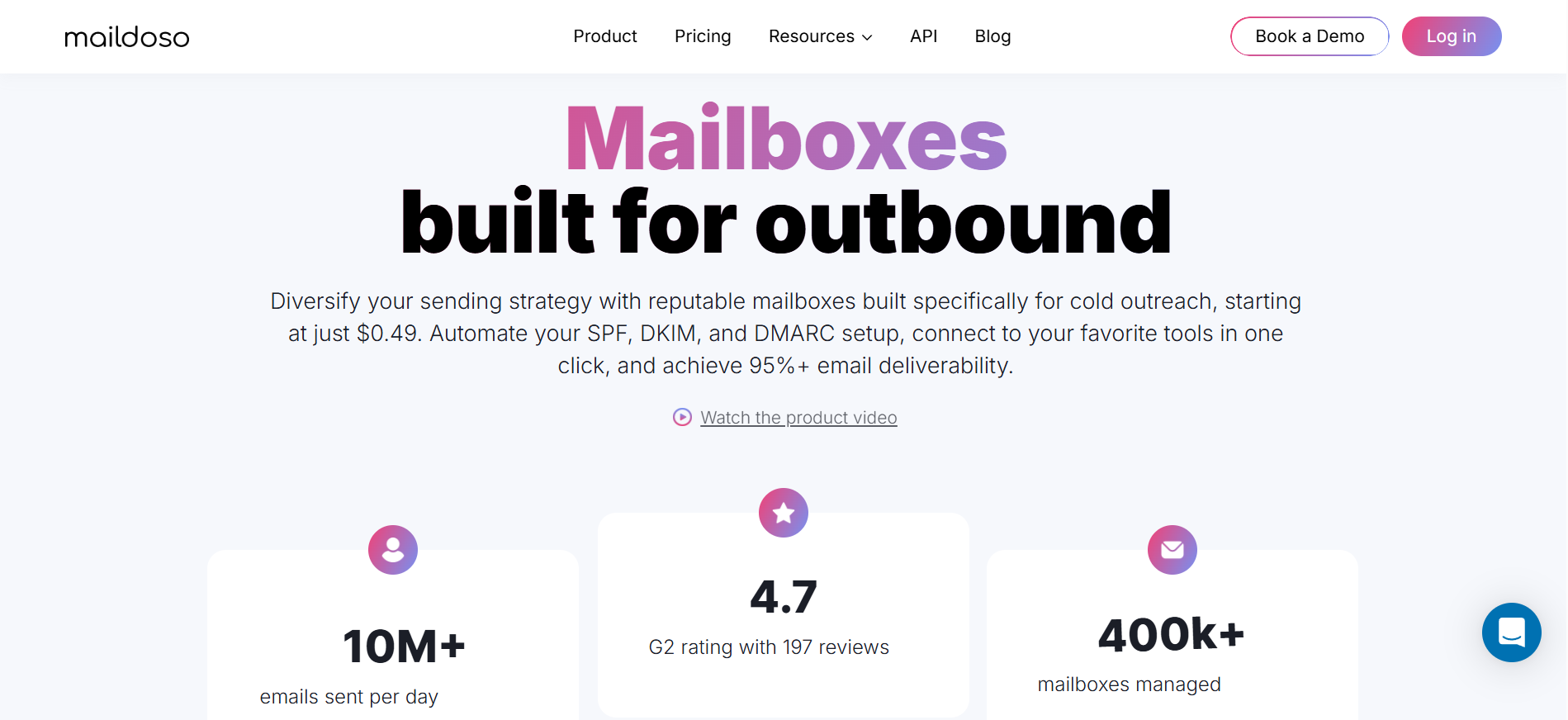
Maildoso takes a different angle on Hypertide's positioning by leaning hard into volume pricing. It is one of the cheapest Hypertide alternatives at scale, with 1,000 mailboxes coming in at $0.49 per mailbox on the top tier.
It sits under BacklinkSwappers Inc. out of San Francisco and claims 10 million emails per day, 400k mailboxes managed, and 7,000+ customer companies. The 4.6 rating across 211 G2 reviews is the largest independent review sample of any tool on this list, so the signal is strong.
The differentiator here is primary domain CAPTCHA protection, which keeps your root domain from being linked to your secondary sending domains. That is a feature I have not seen elsewhere in this category. Maildoso also includes free deliverability audits and IP rotation as part of the standard offering.
The catch is what surfaces in negative G2 reviews. At least one detailed 1-star review reported receiving domains already listed on the SURBL blacklist, which tanked deliverability before warmup even started. For a deeper look at what teams actually experience running 30 SMTP accounts on the platform, my Maildoso review covers the real sending experience. Maildoso refunded in full after escalation, and the 30-day money-back guarantee is available on every plan.
Next up on my list of Hypertide competitors is Zapmail. It sits under Outbox Labs Inc. and positions itself as the most AI-forward mailbox provisioning tool in the category, with built-in tools for domain naming, mailbox handle generation, and profile image creation.
Zapmail delivers real Google Workspace and Microsoft 365 mailboxes on US or EU IPs, with the mailboxes pre-warmed for immediate sending. Setup runs about 10 minutes end-to-end, and DNS is automated with SPF, DKIM, DMARC, and custom tracking domains configured out of the box.
The tool integrates natively with 50+ outreach platforms including Instantly, Smartlead, ReachInbox, Reply, and Lemlist. That is the widest integration list of any provider on this comparison, which makes it a strong fit if you run multiple sequencers or manage clients on different sending stacks.
The G2 sample is small at 7 reviews with a 3.9 rating. One review flags a sales tactic around a limited-time discount that turned out to just be standard volume pricing, so worth going in with clear pricing expectations before any sales call. For teams evaluating broader replacement options, my Zapmail alternatives roundup covers the wider landscape.
Mailforge is the strongest Hypertide alternative for teams that want fast, affordable cold email infrastructure at scale. It beats Hypertide on price, on setup speed, and on independent G2 validation with 92 reviews at 4.67 stars.
If your prospects specifically sit on Google Workspace or Microsoft 365 and ESP-matching is your priority, Primeforge is the better call at $4.50 per mailbox. Maildoso wins on price at high volume, Puzzle Inbox wins on Outlook affordability, and Zapmail wins on integration breadth. But for most outbound teams building a durable sending stack, Mailforge is the pick.
1. What is the best Hypertide alternative in 2026?
Mailforge is the best Hypertide alternative for most outbound teams. It delivers cold email infrastructure at $2 to $3 per mailbox with 5-minute setup and automated DNS. It also carries 92 independent G2 reviews at 4.67 stars, which is far stronger validation than Hypertide's zero-review page.
2. Why do teams switch away from Hypertide?
The main reasons I see are no free trial, thin independent reviews on G2, support response times of 4 to 24 hours, and concentration risk from heavy Microsoft and Entra reliance. Teams also want annual pricing discounts and a public changelog, which Hypertide does not publicly disclose.
3. Which Hypertide alternative is cheapest at scale?
Maildoso wins on per-mailbox cost at the top of the volume tier, dropping to $0.49 per mailbox at 1,000 units. Mailforge is the cheapest at low-to-mid volume between 10 and 300 mailboxes, with roughly 2 months free on annual billing.
4. Do these Hypertide alternatives use real Google Workspace and Microsoft 365 mailboxes?
Primeforge and Zapmail explicitly confirm real Google Workspace and Microsoft 365 mailboxes. Puzzle Inbox states authentic tenant-based inboxes rather than shared subaccounts. Mailforge runs shared-IP infrastructure rather than real Google or Microsoft mailboxes, which is why it prices lower. Maildoso does not publicly specify the mailbox type.
5. How fast can I start sending with these Hypertide alternatives?
Mailforge runs about 5 minutes from signup to live infrastructure. Primeforge and Zapmail take 10 to 30 minutes. Maildoso claims under 10 minutes for setup. Puzzle Inbox takes 24 to 72 hours since it uses a done-for-you delivery model. All five automate SPF, DKIM, and DMARC configuration.
6. How does Zapmail compare to Hypertide directly?
Zapmail offers real Google and Microsoft 365 mailboxes on US or EU IPs, while Hypertide leans heavily on Microsoft Azure and Entra infrastructure. Zapmail wins on integration breadth and geographic flexibility, while Hypertide wins on tenant isolation for high-volume Microsoft campaigns. For a full side-by-side breakdown, see my Zapmail vs Hypertide comparison.
7. Do any Hypertide alternatives offer a free trial?
None of the five alternatives here offer a formal free trial. Maildoso is the closest with its 30-day money-back guarantee on every plan, which effectively lets you test with real domains and get a refund if deliverability does not meet expectations.