Dear Instantly, it's not you. It's the spam folder and the increased pricing plans!
Instantly.ai hooked me at the start. Clean UI. Unlimited inboxes. Built-in warmup. And those green dashboards that looked so promising.
For beginners and small campaigns, the easy setup is still great. A lot of people on G2 love that part.
But here's what happened when I started using it for real, high-volume outbound work.
I signed up thinking $37.60 a month was a good deal.
Then the extras kicked in.
That $37.60/month quickly turned into $374+ every month.
On top of that, the interface started to feel clunky at scale.
Some users report that support responses can take several days, and deliverability doesn't always match the warmup scores shown in the platform.
I've seen similar frustrations echoed across Reddit's r/coldemail, with many users surprised by the actual cost of running campaigns as they grow.
So, after testing it myself and cross-checking the latest G2 reviews, Reddit discussions, and 2026 comparisons, I put together this list of the 6 best Instantly alternatives that offer better value, greater transparency, and a smoother experience for serious outbound teams.
Before I started testing alternatives, I spent time on Reddit, G2, Trustpilot, and cold email communities to understand what's actually pushing people away from Instantly.
These are the patterns I kept seeing over and over again.
This is the most common complaint across every platform I checked. Multiple r/coldemail threads through Q1 2026 surfaced the same issue.
Users reporting warmup heat scores reading 90+ while their live campaigns were landing in spam at 30-40% rates.
One Reddit thread titled
"Instantly.ai Just Admitted Their Warmup Network Got My Brand New Domains' Reputation Blocked"
ranks on the first page of Google for "instantly.ai review." That's not an isolated incident. It's a recurring pattern that multiple users have independently confirmed.
Several Trustpilot reviewers reported that domains set up through Instantly's Done-For-You service are retained by Instantly.
If you try to use those domains with another tool or leave the platform, you hit resistance.
One Trustpilot reviewer wrote that their emails and domains became unusable due to an internal issue, but they were still being charged.
An agency owner described support going silent after raising domain ownership concerns.
When deliverability breaks at 11 PM the night before a client report, you need a human who understands your setup.
Multiple Trustpilot reviews describe support responses that feel like talking to a bot.
One reviewer on Trustpilot said the support was "generic and unhelpful" when their emails went to spam and bounce rates climbed.
G2 reviewers have also flagged customer response delays and questionable responses as a recurring concern.
Instantly bills leads and sends as separate subscriptions.
Inbox placement testing is another add-on. The 2025 credits system migration confused a lot of users, too.
Multiple Trustpilot reviews from early 2026 still reference billing glitches where credits were deducted incorrectly.
What looks like a $37/month tool often ends up costing $150+ once you add everything a real outbound team actually needs.
When deliverability drops, Instantly doesn't give you real-time alerts or root cause diagnostics.
You're left guessing why your open rates suddenly collapsed.
Multiple Reddit threads in r/coldemail describe users seeing campaigns stop mid-send without any notification.
There's no transparency into what's happening at the infrastructure level, and that lack of visibility is what eventually pushed me to look at independent infrastructure options.
That said, Instantly's UI is still one of the cleanest in the space.
The campaign builder works well for straightforward cold email.
For moderate-volume outbound, it gets the job done. But when the cracks show, they show where it hurts most.
I didn't just read landing pages. I tested these tools, talked to people who use them, and cross-referenced G2, Trustpilot, and Reddit feedback for each one.
Here are the six criteria I used to compare them.
Salesforge is the first tool I tested when I started looking beyond Instantly, and it ended up becoming my primary sending platform.
It is the central outreach tool in the Forge stack ecosystem, and the multi-channel approach is what sets it apart from almost everything else on this list.
I connected 15 email accounts and 3 LinkedIn profiles in my first session. The whole setup took about 20 minutes.
What I noticed immediately is that email and LinkedIn steps live inside the same sequence builder.
I wasn't switching between tools or tabs. I built a 5-step sequence with 2 email touches and 3 LinkedIn actions (connection request, profile view, and a follow-up message) in one workflow.
Agent Frank is the feature that surprised me most and is similar to how Instantly’s AI agent works.
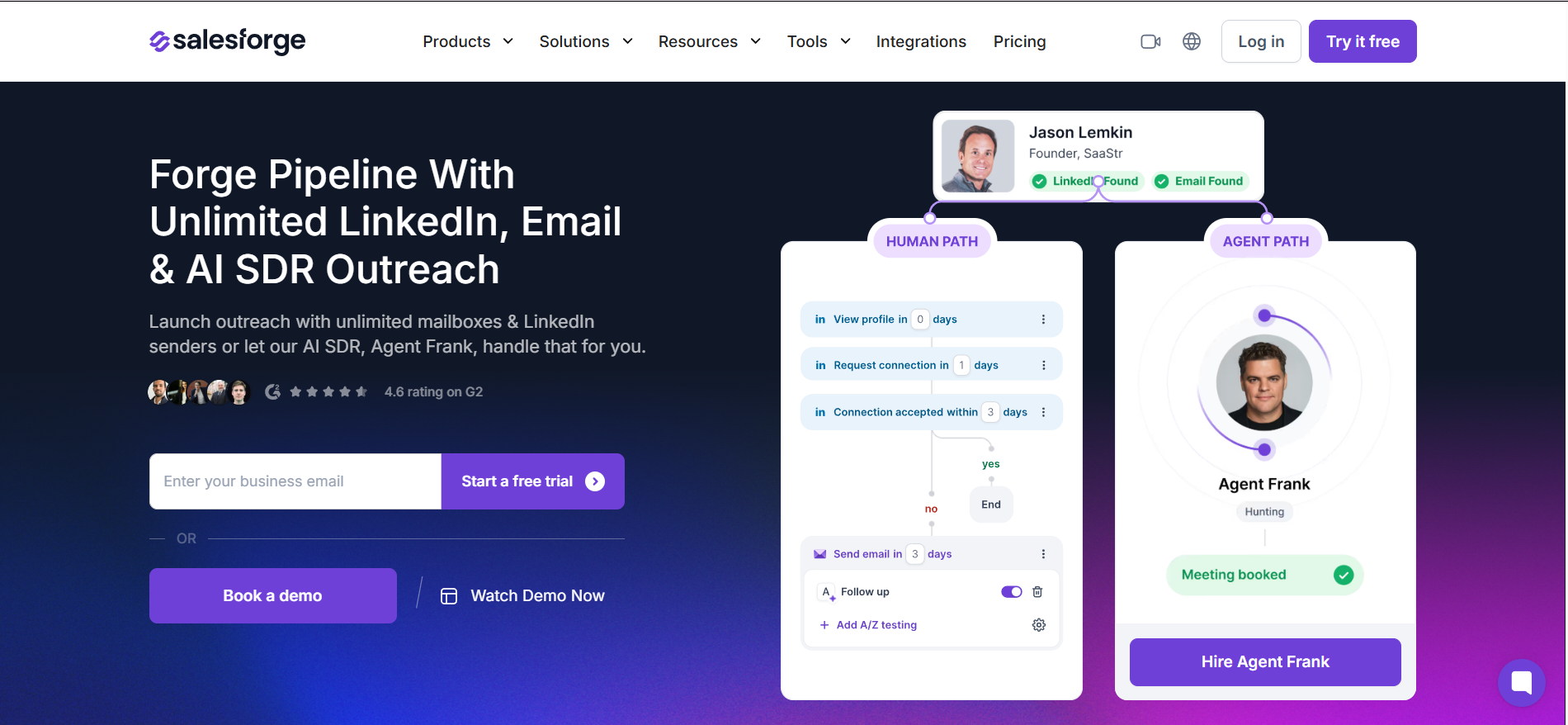
It is Salesforge's autonomous AI SDR. I set it up in Auto-Pilot mode, uploaded my product docs and case studies to the Knowledge Base, and let him run.
Within two weeks, he had booked 12 meetings I didn't have to lift a finger for. The emails he wrote actually referenced my product correctly because of the Knowledge Base upload.
I also tested Co-Pilot mode on a separate campaign where I wanted to review outreach before it went out. The approval workflow was clean and fast.
The broader Forge stack connected naturally during my testing. I found leads in Leadsforge and launched sequences through Salesforge.
Start a free trial of Salesforge, no credit card required
The next alternative to Instantly on this list solves a completely different problem. Mailforge is not a sending tool.
Across all the Instantly alternatives I tested, Mailforge stood out because it does not try to be a sending tool. It focuses only on infrastructure.
Mailforge is a distributed cold email infrastructure platform that sets up domains and mailboxes for outreach in minutes.
SPF, DKIM, DMARC, and tracking records are automatically configured, which removes most of the technical setup work.
I tested it to understand whether my deliverability issues were coming from Instantly or from the underlying infrastructure.
Setting up around 200 domains and mailboxes took less than 10 minutes, and everything was ready to connect to a sending tool the same day.
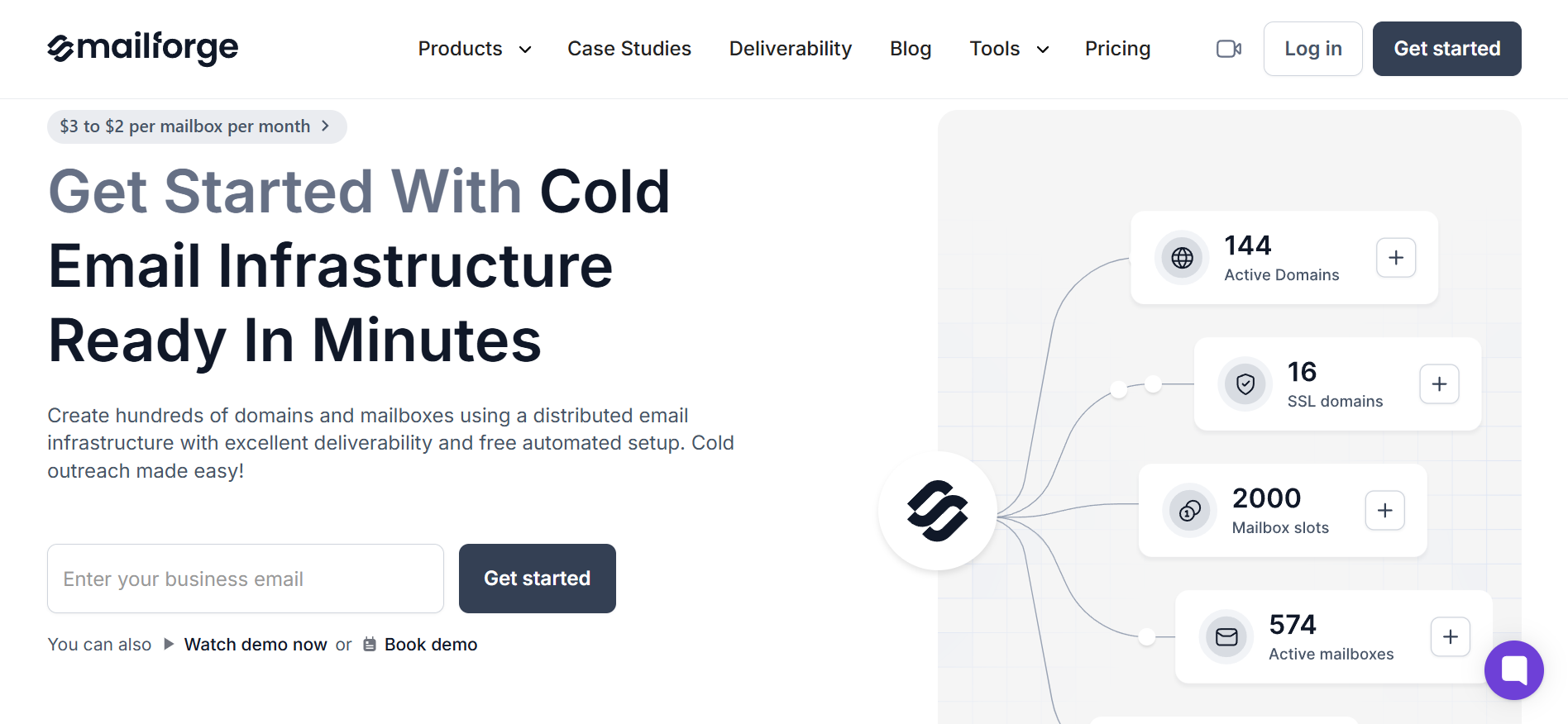
The main advantages are cost and flexibility.
At around $2–3 per mailbox, it is significantly cheaper than traditional setups like Google Workspace, especially at scale.
More importantly, the infrastructure is portable. I was able to connect the same Mailforge setup to different sending tools without any changes.
Mailforge works best as a foundation layer rather than a standalone tool. It becomes most powerful when paired with a sending platform like Salesforge
Get started with Mailforge. Your infrastructure will be ready in 5 minutes.
Another strong Instantly alternative on this list is Saleshandy, and it is the one I would point budget-conscious teams to first.
It covers more ground than most tools at a lower entry price, and the feature set has quietly become one of the most comprehensive in the market.
I tested Saleshandy on a campaign targeting 5,000 prospects across email and LinkedIn.
The Outreach Starter plan at $25/mo (annual) gave me 2,000 active prospects and unlimited email accounts.
That is $5 less than Instantly's Growth plan for comparable email functionality, and Saleshandy doesn't charge you separately for leads and sending. The lead database is built in.
Speaking of the lead database, Saleshandy now has 852M+ contacts across 42M+ companies with 50+ buying signal filters.
That is significantly larger than Instantly's 450M+ database.
I ran ICP searches targeting VP-level decision makers in SaaS companies with 50-200 employees.
The data quality was solid. Not every contact had a verified email, but the hit rate was comparable to what I've seen on Apollo.
The channel coverage is the widest in this comparison.
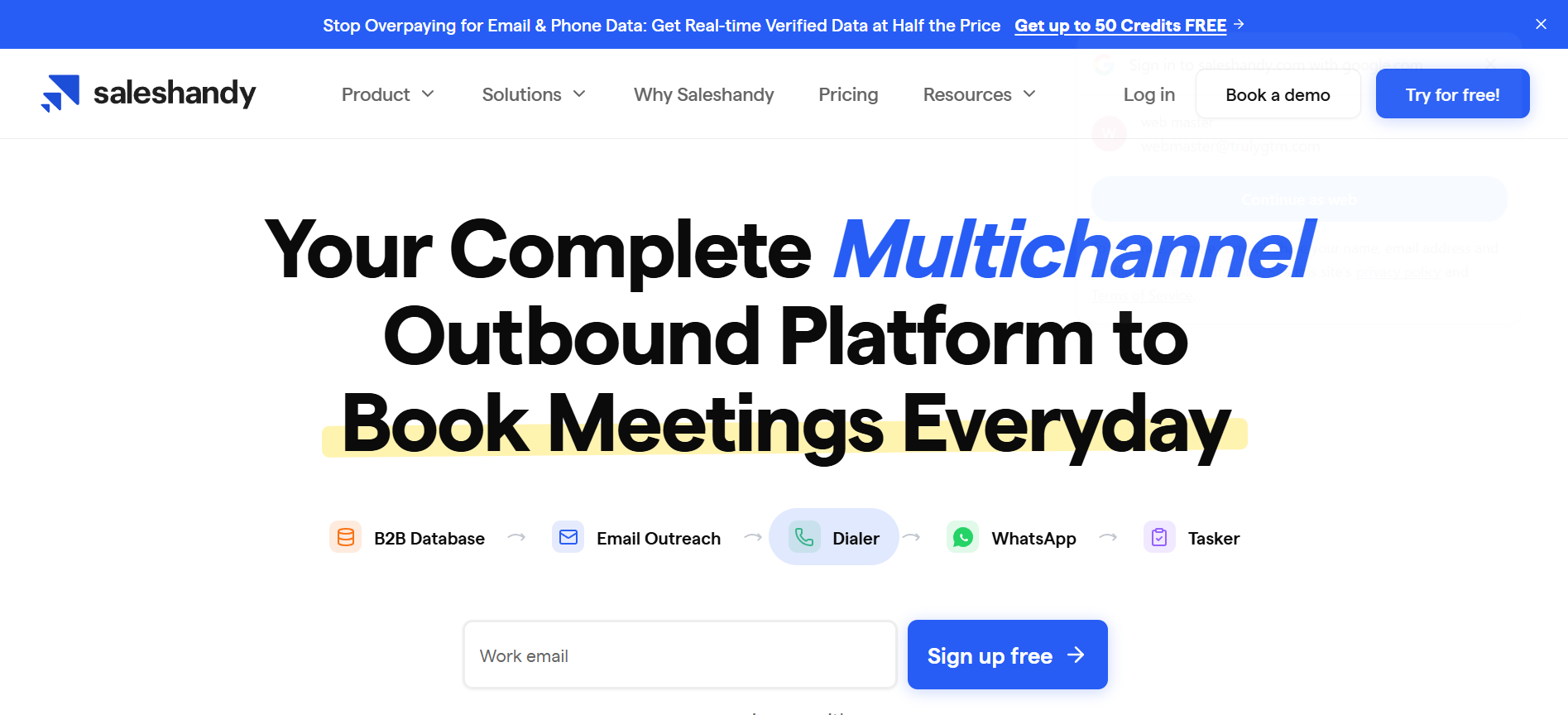
I built sequences with email steps, LinkedIn connection requests, WhatsApp messages, call tasks, and custom follow-up tasks in one workflow.
Instantly has added multi-channel features, but Saleshandy's implementation feels more mature because they have been building it for longer.
On the deliverability side, Saleshandy includes automatic email warmup, domain health monitoring, and DKIM/DMARC checks.
I also tested the inbox placement testing add-on (starts at $34/mo for Starter).
It showed me exactly where my emails were landing across Gmail, Outlook, and Yahoo before I went live.
That kind of pre-send visibility is something Instantly charges separately for too, so neither platform bundles it in for free.
For agencies, the white-label option on Scale plans ($139/mo annual) is a real draw.
Unlimited client accounts with custom branding at a price point that undercuts most agency-focused tools I have tested.
You can also read https://www.mailforge.ai/blog/saleshandy-reviews
Smartlead is probably the closest competitor to Instantly and one of the most common alternatives recommended in Reddit's cold email communities.
When I tested it on a campaign sending around 8,000 emails per day across 40 mailboxes, the overall workflow felt familiar. You still get unlimited mailboxes, email warmup, and campaign automation.
The biggest difference is the infrastructure behind it.
Smartlead's SmartInfra gives users access to dedicated-tenant IPs, which means your sender reputation isn't affected by other users on the platform.
That level of control is something I never had with Instantly's shared infrastructure.
Another standout feature is SmartProspect.
Instead of purchasing lead credits separately, Smartlead rewards users with verified leads based on sending activity.
On my Pro plan, that translated into roughly 30,000 verified prospect emails per month, which added meaningful value.
I also found Smartlead's warmup network more reliable. During testing, inbox placement aligned much more closely with the warmup scores than with what I experienced on Instantly.
The biggest downside is that Smartlead remains heavily email-focused. While it offers calling capabilities, it lacks the native LinkedIn, WhatsApp, and broader multichannel automation available in tools like Salesforge, Lemlist, and Saleshandy.
Recommended Read https://www.mailforge.ai/blog/smartlead-alternatives
The next Instantly alternative worth considering is Lemlist, especially if your outreach strategy depends on personalization and multichannel engagement.
While Instantly is primarily focused on email outreach, Lemlist combines email, LinkedIn, phone calls, and SMS into a single workflow.
When I tested the Multichannel plan, I built a sequence that included email touches, LinkedIn connection requests, a personalized voice note, and an SMS follow-up.
The voice note feature stood out because it added a human touch that helped improve engagement compared to my email-only campaigns.
What really separates Lemlist from Instantly is LemAgent.
Instead of manually researching prospects, LemAgent acts like an AI-powered sales assistant.
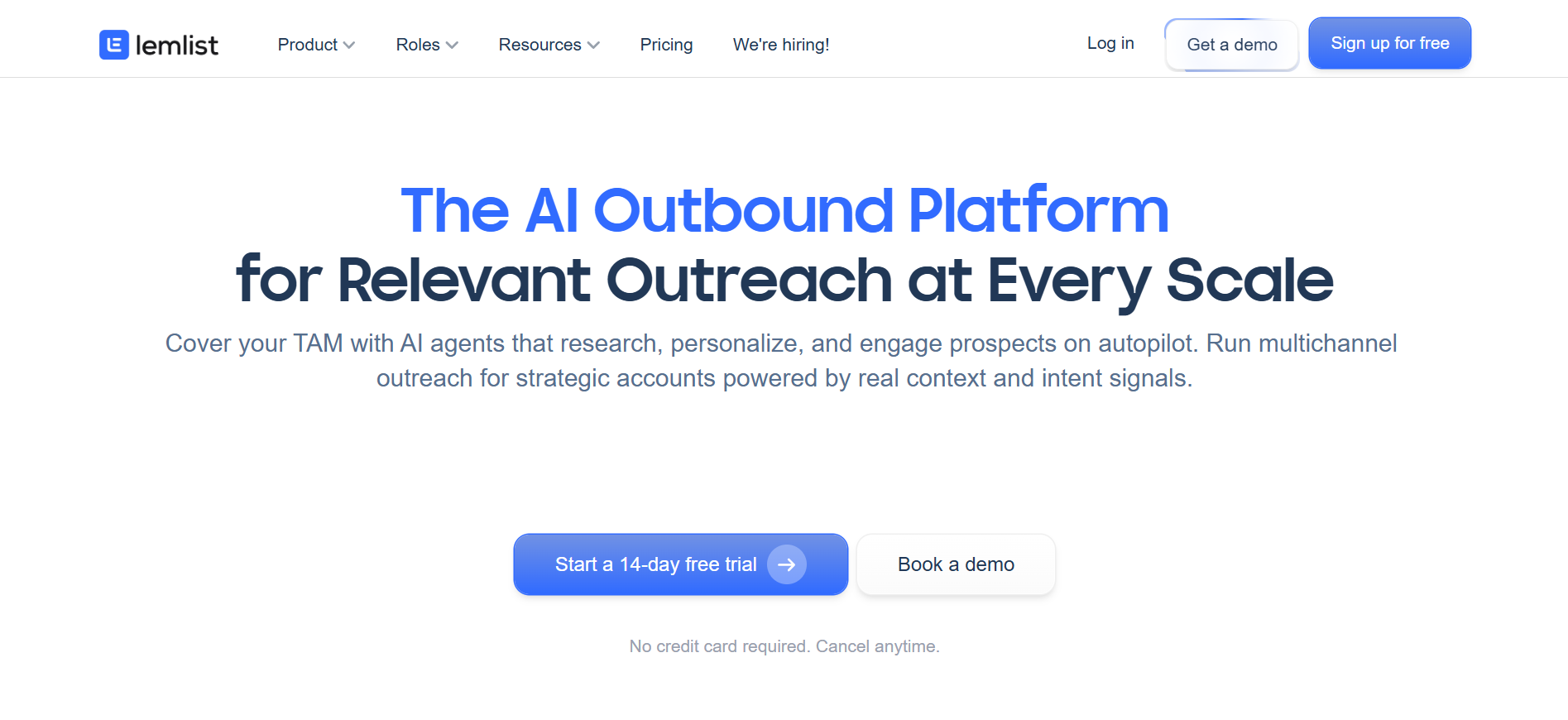
It can identify potential prospects, gather relevant company and contact information, and help generate personalized outreach based on real buying signals.
For teams spending hours on prospect research before launching campaigns, this can remove a significant amount of manual work.
The biggest drawback is pricing.
The entry-level Email plan limits users to 5,000 emails per month, which can feel restrictive compared to other platforms in this category.
To get unlimited sending and the full multichannel experience, most teams will likely need the higher-tier plan
Recommended Read: https://www.mailforge.ai/blog/lemlist-alternatives
The last Instantly alternative on this list is Apollo.io,
If your main frustration with Instantly is paying separately for a lead database and a sending tool, Apollo solves that by combining both in one platform.
It offers a large B2B database alongside outreach sequencing, plus a permanent free plan that is actually usable.
I started on the free plan to test it, which includes 900 credits per year, 2 sequences, 1 mailbox, and 250 emails per day.
That’s enough for small campaigns and early validation before upgrading.
When I moved to the Basic plan ($49/user/mo annual), I got access to unlimited sequences and more credits.
The real strength of Apollo is its database.
With 230M+ contacts and strong filtering options, I was able to build precise ICP lists like CTOs at Series B SaaS companies in the US. Email verification and enrichment quality were consistently strong during testing.
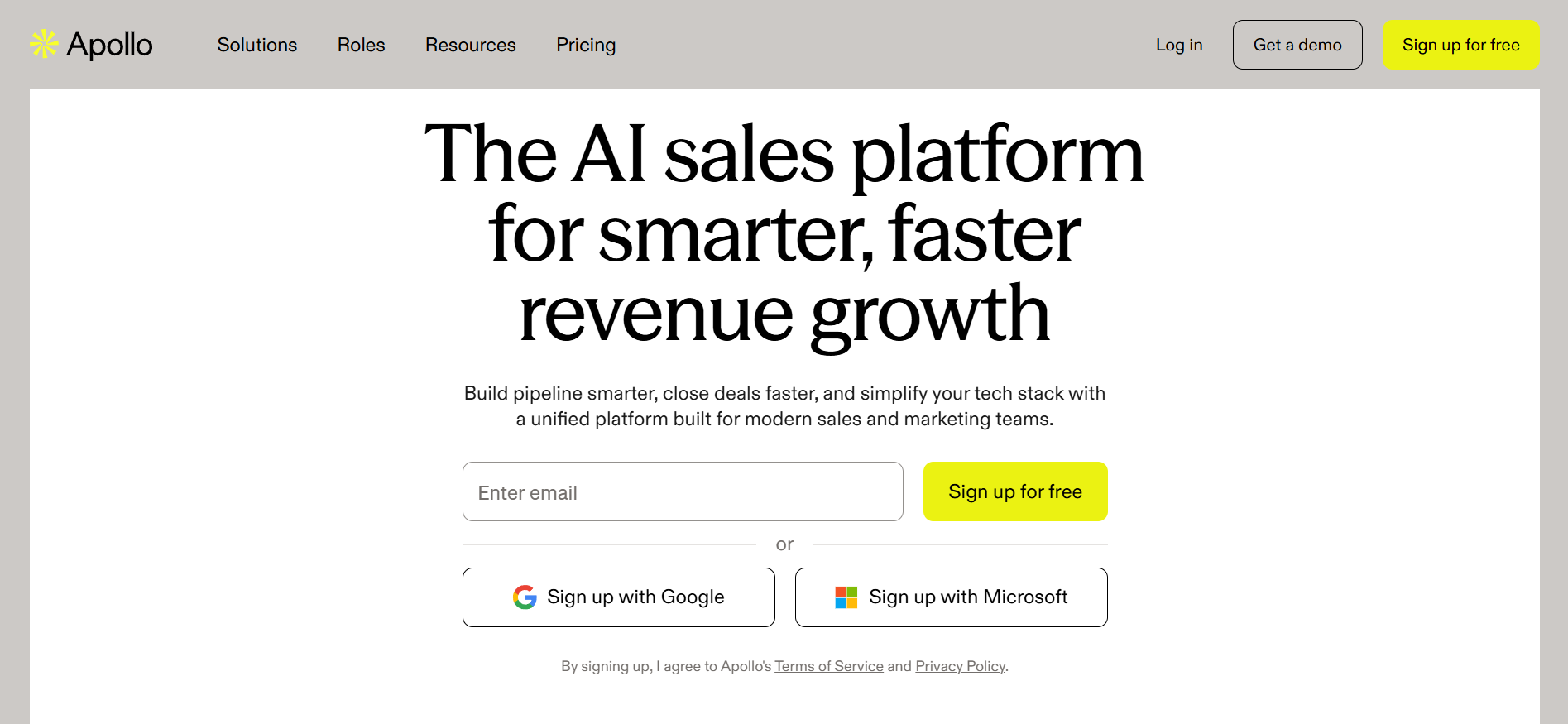
Apollo also includes an AI Assistant that helps with prospect research and email writing.
It generates personalized insights based on LinkedIn activity and company data, and I found myself editing only a small portion of its suggestions.
There are a few limitations to keep in mind. LinkedIn functionality is mostly extension-based, so you cannot automate LinkedIn steps inside sequences like you can in tools such as Lemlist or Salesforge.
Also, while Apollo includes deliverability tools and mailbox setup, its infrastructure is standard (Google/Microsoft) rather than purpose-built cold email infrastructure.
It also stands out for its inbound add-on, which identifies website visitors and enriches inbound leads.
This is something most other Instantly alternatives in this list do not offer.
Pricing
Across all the Instantly alternatives I tested, there was not a single tool that won everything, but Salesforge came the closest to feeling like a complete outbound system.
I liked how structured the platform felt from the start. Setting up sequences across email and LinkedIn felt straightforward, and the addition of an AI SDR (Agent Frank) made the workflow feel more hands-off than most tools in this category. Instead of constantly managing campaigns, I found myself spending more time reviewing conversations and actual responses.
What stood out most was how naturally it handled the full outbound flow, from prospecting support to outreach and follow-ups, without needing multiple tools stitched together.
For infrastructure-heavy setups, Mailforge also stood out in a different way. It kept things simple, cost-efficient, and flexible, especially when managing multiple mailboxes at scale.
Together, they represent one of the more complete alternatives to Instantly if you are looking to move beyond a single-platform setup and take more control over your outbound system.
It depends on your main need. Salesforge is best for multichannel outbound with an AI SDR, while Mailforge is best for infrastructure and deliverability control. For budget tools, Saleshandy is strong, and Apollo.io works well if you want a built-in lead database.
Instantly still works for basic cold email campaigns with a simple setup. However, concerns around deliverability accuracy and pricing transparency mean many teams now test alternatives before committing.
Apollo.io offers a free plan, making it the cheapest entry point. Among paid tools, Saleshandy and Smartlead are the most affordable options. For infrastructure, Mailforge is one of the lowest-cost choices at $2–3 per mailbox.
Saleshandy and Smartlead are commonly used by agencies due to client management and white-label options. Salesforge also supports agency workflows with automation and API access.
Yes. Mailforge is tool-agnostic and works with any SMTP-compatible sending platform like Salesforge, Smartlead, or Instantly. Your domains and mailboxes are not locked into one ecosystem.
Mailforge is focused on cost-efficient shared infrastructure, while Infraforge offers dedicated IPs for higher-volume senders who need more control over reputation.
AirMail is tied to Instantly’s ecosystem, while Mailforge infrastructure is portable across tools. Mailforge is also more cost-efficient, especially at scale.