

Hypertide sells Microsoft Azure and Entra inboxes in $50/month orders; Mailscale runs its own SMTP servers on tiered plans starting at $79/month. Both lock you into a single infrastructure type and sit outside any wider sending stack.
For affordable cold-email-built infrastructure that plugs into a full deliverability stack, Mailforge is the stronger choice - transparent per-mailbox pricing, free unlimited Warmforge warm-up, domain transfer in and out, SOC 2 compliance, and a clear path to dedicated IPs (Infraforge) or Google/Microsoft mailboxes (Primeforge). Mailboxes run about $3 each, dropping toward $2 at volume.
If you run cold outreach, your infrastructure decision quietly sets the ceiling on everything else. The sequencer, the copy, the list - none of it matters if your mail lands in spam or your provider buckles under volume. So I wanted to put three of the more talked-about cold-email infrastructure tools side by side and work out where each one actually fits.
This comparison looks at Mailforge, Hypertide, and Mailscale: how each one builds inboxes, what it costs as you scale, the deliverability trade-offs, and the kind of sender each is really designed for. I've pulled pricing and specs from each provider's live pages and cross-checked reviewer feedback, so the numbers reflect what you'd see today rather than launch-day marketing. For broader context on the category, Mailforge's own rundown of cold email infrastructure tools is a useful primer.
Cold Email Infrastructure Comparison at a Glance: Hypertide vs Mailscale
Before the detail, here's how the three stack up across the dimensions that tend to decide a purchase. Read this as the shape of each tool, not a scoreboard - the right pick depends heavily on your volume and how you like to scale.
| Mailforge | Hypertide | Mailscale | |
|---|---|---|---|
| Infrastructure | Shared distributed cold-email infrastructure | Microsoft Azure / Entra (Outlook) tenants | Self-hosted SMTP, own IP pools |
| IP model | Shared IPs (dedicated via Infraforge) | Dedicated IP per order, isolated tenant | Shared IP pools (dedicated on Unlimited) |
| Entry price | ~$3/mailbox/mo | $50/mo per order + setup fee | $79/mo (Solopreneur) |
| Pricing model | Per mailbox, no tiers | Per order (2 domains, up to 100 inboxes) | Tiered plans by inbox count |
| Setup time | ~5 minutes | 4–6 hours | Under 60 seconds |
| Per-inbox sending | ~30–50/day | ~2/day (≈5,000/mo per order) | ~30–50/day |
| Warm-up | Free unlimited via Warmforge | 2-week warm-up, bulk tools | Built-in, guarantee-backed |
| Domains | Buy in-app or BYOD; full transfer in/out | BYOD free, or buy in-app | Buy in-app or BYOD ($2/domain) |
| Google / Microsoft mailboxes | Yes, via Primeforge | Microsoft/Azure focused | No (SMTP only) |
| Free trial | No (buy mailboxes) | No (demo onboarding) | 7-day free trial |
| Compliance | SOC 2 compliant | Not publicly stated | Not publicly stated |
| Part of a wider stack | Yes - the Forge Stack | Standalone | Standalone |
Hypertide Overview
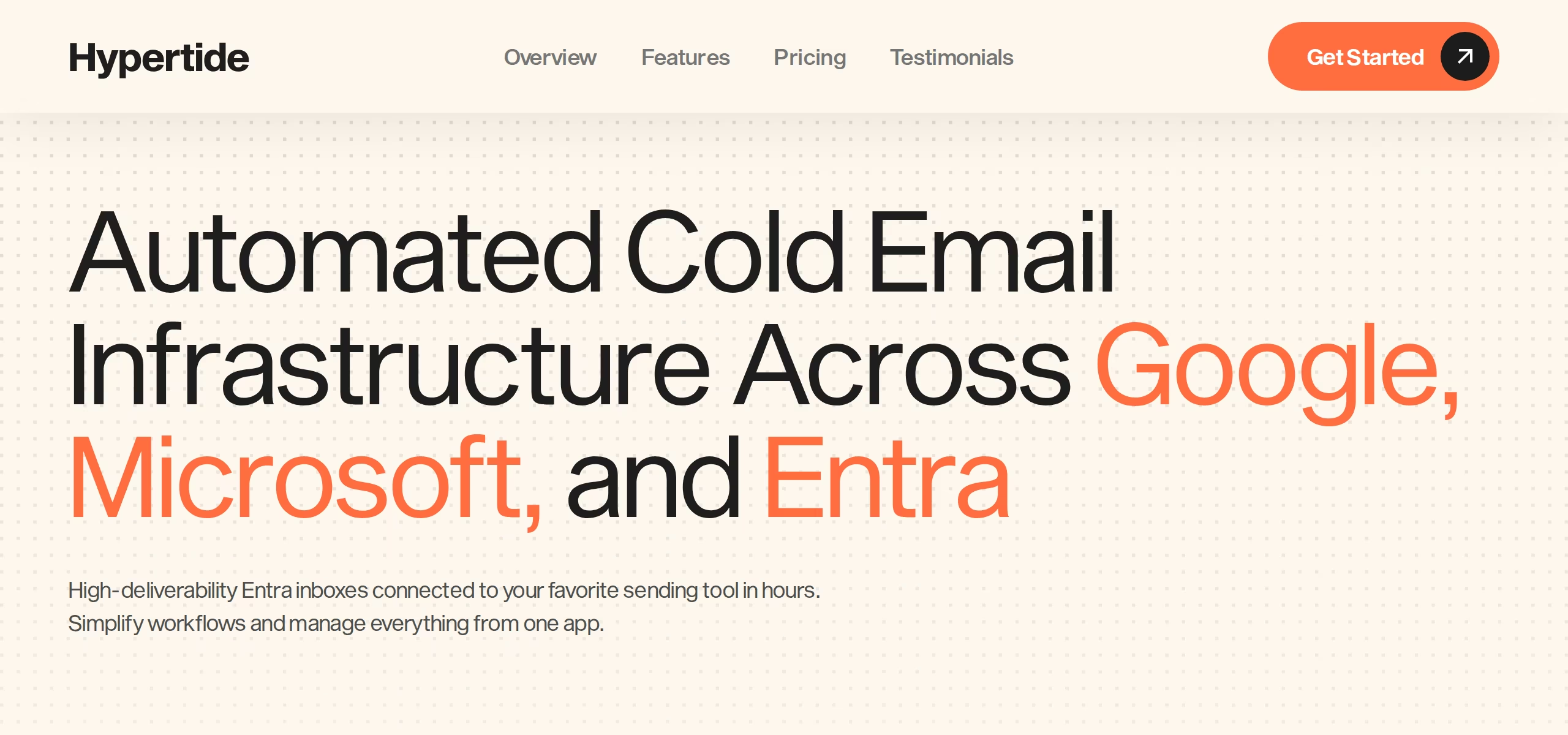
Hypertide is a newer entrant - founded in August 2024 - built around Microsoft Azure and Entra inboxes with a native Outlook interface. Its pitch is automation: rather than paying virtual assistants to hand-configure inboxes, you place an order and Hypertide provisions an isolated tenant with its own domains, users and IP, typically within four to six hours.
The model is priced per order at $50/month, plus a one-time setup and implementation fee that isn't published on the site. Each order covers two domains and up to 100 Azure inboxes (50 per domain). After a two-week warm-up, the provider guides each inbox to roughly two outbound emails a day, which works out to around 5,000 emails a month per order. SPF, DKIM and DMARC come pre-configured, domains can be brought in free or bought in-app, and orders connect to SmartLead, Instantly and Bison. There's no free trial; onboarding runs through a demo, and plans are month-to-month with cancel-anytime.
Who it's for
Hypertide suits teams that specifically want Microsoft/Outlook-native inboxes on isolated infrastructure and are comfortable scaling by stacking orders. If Outlook deliverability is your priority and you like a flat per-order price, it's a coherent offer.
Limitations to weigh
- Single-platform dependency. The whole model leans on Microsoft Azure, so a policy or platform change on Microsoft's side is a concentrated risk.
- Low per-inbox volume. At roughly two emails per inbox per day, hitting real volume means provisioning a lot of inboxes - and a lot of orders.
- Undisclosed setup fee. A one-time implementation charge that competitors generally don't levy, and you only learn the figure through a demo.
- Thin track record. With a 2024 launch and very few public reviews, there's little independent signal yet.
That last point is worth sitting with. The handful of public reviews skew cautious - this 1-star Trustpilot note flags exactly the instability you'd watch for in a young provider.
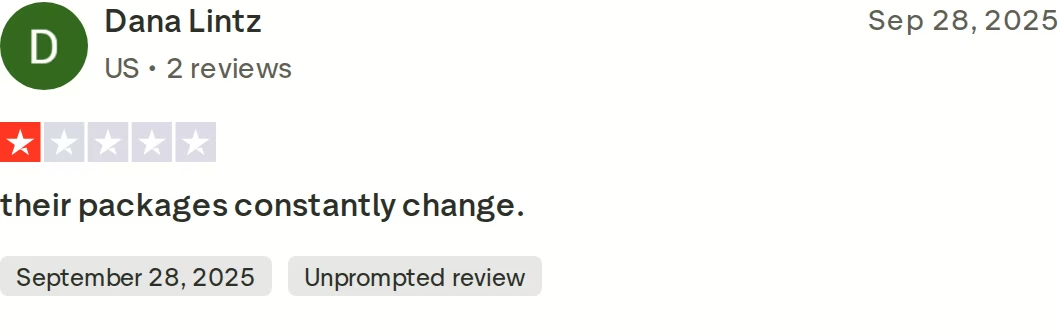
Reviews this sparse don't condemn a product, but they don't reassure either - and for infrastructure you're trusting with your sending reputation, a longer paper trail matters. Mailforge's team has written up a fuller Hypertide review if you want the deeper read.
Mailscale Overview
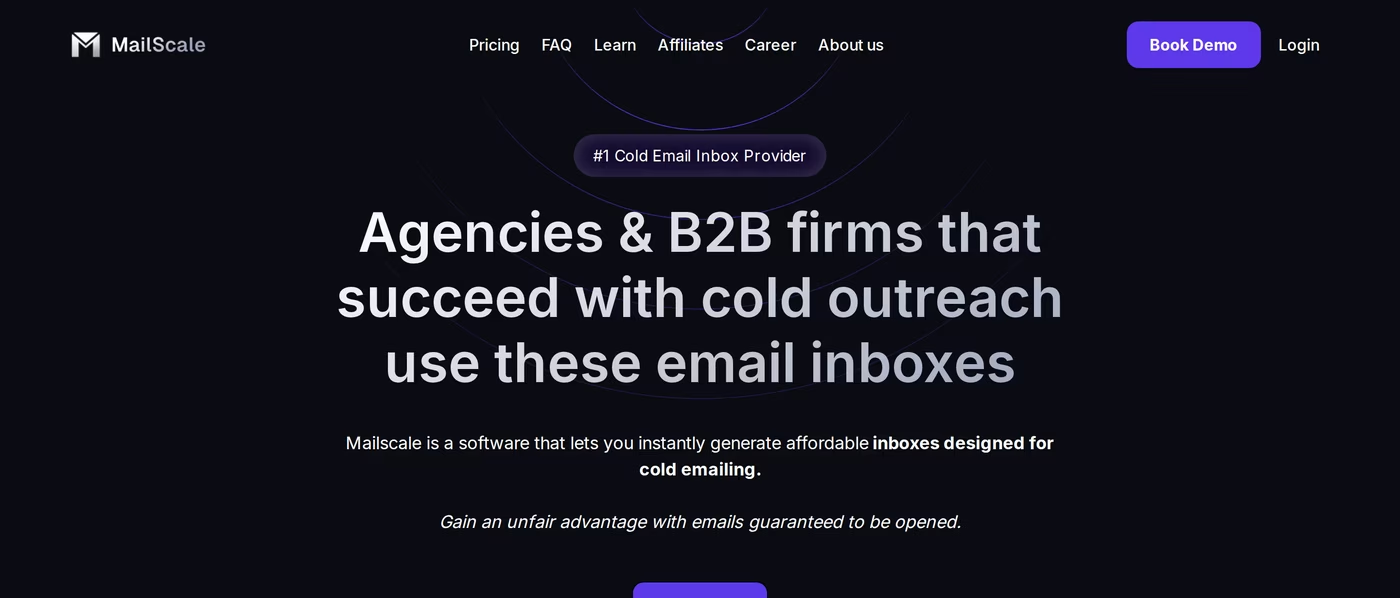
Mailscale, founded in late 2023, takes a different route: it runs its own self-hosted SMTP infrastructure and IP pools rather than reselling Google or Microsoft mailboxes. The selling point is control over the full stack - SMTP servers, IPs and an automated monitoring layer watching for blacklisting, reputation and bounces - paired with very fast setup (it advertises inbox creation in under a minute).
Pricing is tiered by inbox count: Solopreneur at $79/month (15 inboxes), Business at $119/month (50 inboxes), Enterprise at $249/month (200 inboxes), and an Unlimited plan from $1,000+/month that adds dedicated IPs, a self-healing mechanism and a dedicated deliverability specialist. Annual billing knocks roughly 20% off. On Enterprise, extra inboxes are $1.50/month each. Domains can be bought in-app for about $10–15/year or brought in at $2/domain - though BYOD voids the deliverability guarantee. The platform recommends 30–50 emails per account per day after a one-to-two-week warm-up, integrates with Instantly, Smartlead, Apollo, Reply.io, Lemlist and others, and includes a free cold-email course from the Business tier up. A 7-day free trial is available with a card on file.
Mailscale also leans on a deliverability guarantee - 95–100% to Google and Outlook, with 30-day domain recovery and free domain replacement if inbox placement falls below 80%. On paper that's reassuring, and its third-party ratings are the strongest of the three.
Who it's for
Mailscale fits solo operators and small teams who want the fastest possible setup and a self-hosted SMTP approach with a deliverability promise attached, and who are happy to move up tiers as they grow.
Limitations to weigh
- Tier cliffs. Pricing jumps at inbox boundaries - your 16th inbox pushes you from $79 to $119, and your 51st to $249 - so costs step rather than scale smoothly.
- Deliverability volatility. Self-hosted shared IPs can wobble; some users report placement dropping sharply after IP or data-centre changes.
- No Google or Microsoft option. It's SMTP-only, and some corporate filters treat unknown SMTP senders more warily than established mailbox providers.
- Aggressive sending guidance. 30–50 emails a day per account on shared SMTP is punchy, and pushing it raises blacklist risk.
The volatility concern isn't hypothetical. This verified 1-star Trustpilot review describes deliverability sliding below 50% by the second week, with an IP and data-centre move that didn't fix it.
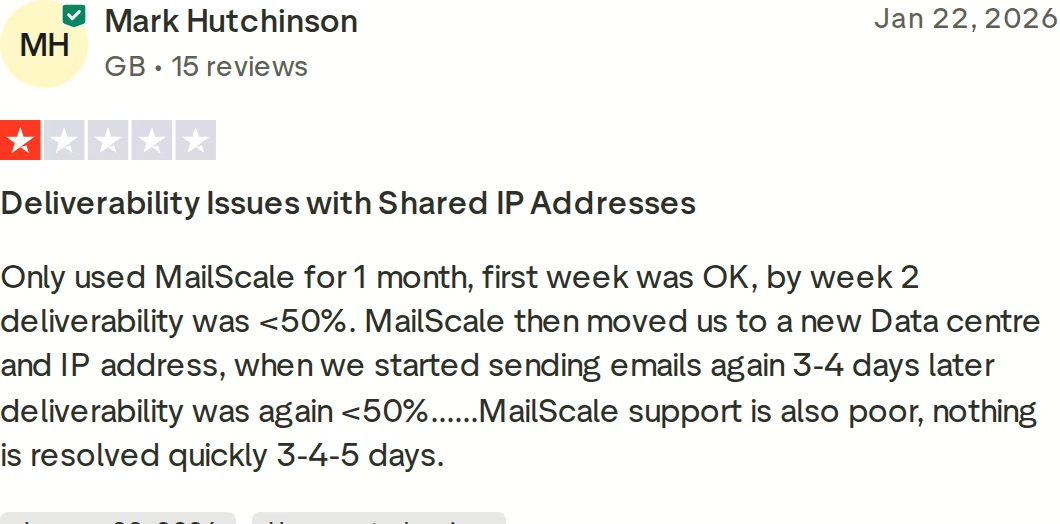
To be fair, Mailscale's overall scores run higher than this single review suggests, and plenty of users are satisfied. For the balanced picture, Mailforge's roundup of Mailscale reviews weighs the positives against the recurring complaints. If you're comparing self-hosted SMTP approaches generally, the SMTP cold email guide is worth a look.
Mailforge Overview
Mailforge is shared, distributed cold-email infrastructure built specifically for outbound. Instead of reselling a single provider or running one SMTP cluster, it spreads sending across distributed infrastructure, automates all the DNS plumbing (SPF, DKIM, DMARC and tracking), and gets you live in about five minutes. More than 10,000 businesses use it, and it's SOC 2 compliant - a line item neither competitor publicly matches.
Pricing is refreshingly simple: around $3 per mailbox per month, dropping toward $2 at volume, with no tier cliffs to trip over. For scale, 200 mailboxes land near $484/month - against roughly $1,680 on Google Workspace or $1,200 on Microsoft 365 for the equivalent. You can buy domains in-app or bring your own, and crucially you can transfer domains in and out freely, run multiple workspaces, push bulk DNS updates, and add SSL and domain masking. It plugs into any sending tool, with native support for Salesforge.
What sets Mailforge apart isn't a single feature - it's that it's part of the Forge Stack. Warm-up comes free and unlimited through Warmforge. When you need maximum reputation isolation, Infraforge adds dedicated IPs. When a campaign needs genuine Google or Microsoft 365 mailboxes, Primeforge covers that. And Salesforge handles the sending layer on top. You start on shared infrastructure and layer in dedicated IPs or premium mailboxes without ripping anything out and starting over. Mailforge's own guide to email infrastructure providers explains how the pieces fit.
Who it's for
Mailforge fits teams that want cold-email-built infrastructure with a clear upgrade path - transparent per-mailbox billing, free warm-up, domain portability and the option to add dedicated IPs or Google/Microsoft mailboxes as they grow. It's a particularly good fit if you'd rather standardise on one ecosystem than bolt together separate vendors.
Honest limitations
- Shared IPs by default. Like any shared model, you have less reputation control than dedicated infrastructure. Mailforge's own answer is Infraforge for dedicated IPs when you need them - but out of the box, you're sharing.
- Not a sequencer. Mailforge is infrastructure, not a campaign tool, so it doesn't ship advanced campaign analytics. You'll pair it with a sending tool (Salesforge or otherwise).
- No free trial. You commit to buying mailboxes up front rather than kicking the tyres free - Mailscale's 7-day trial is genuinely more generous here.
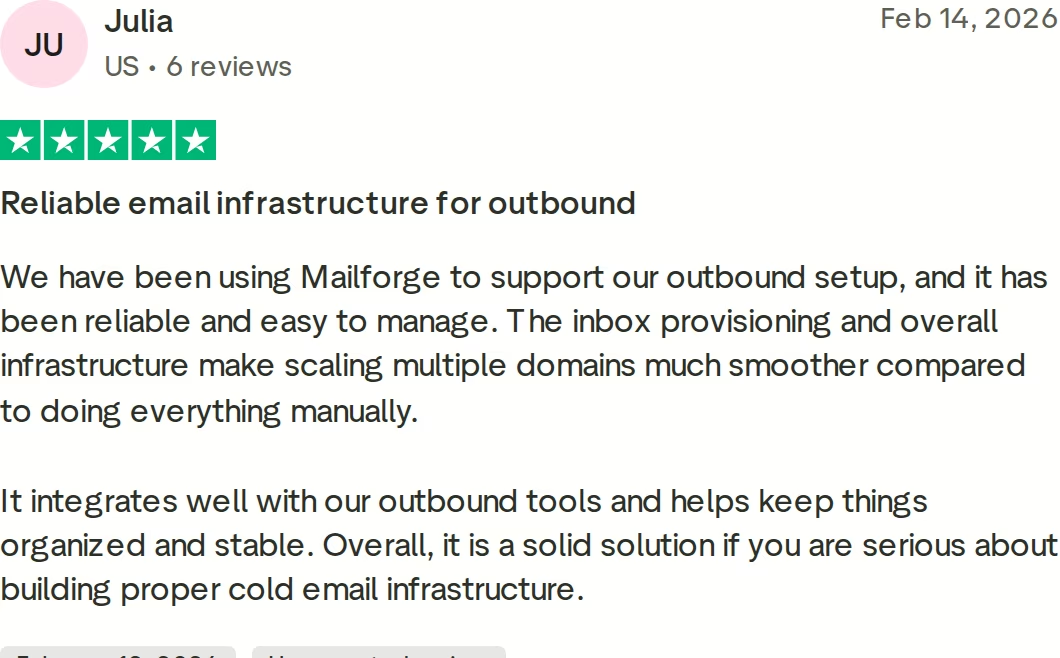
On the upside, the sentiment from senders actually running outbound on it tends to be steady - reliable infrastructure that's easy to manage across multiple domains.
in Action
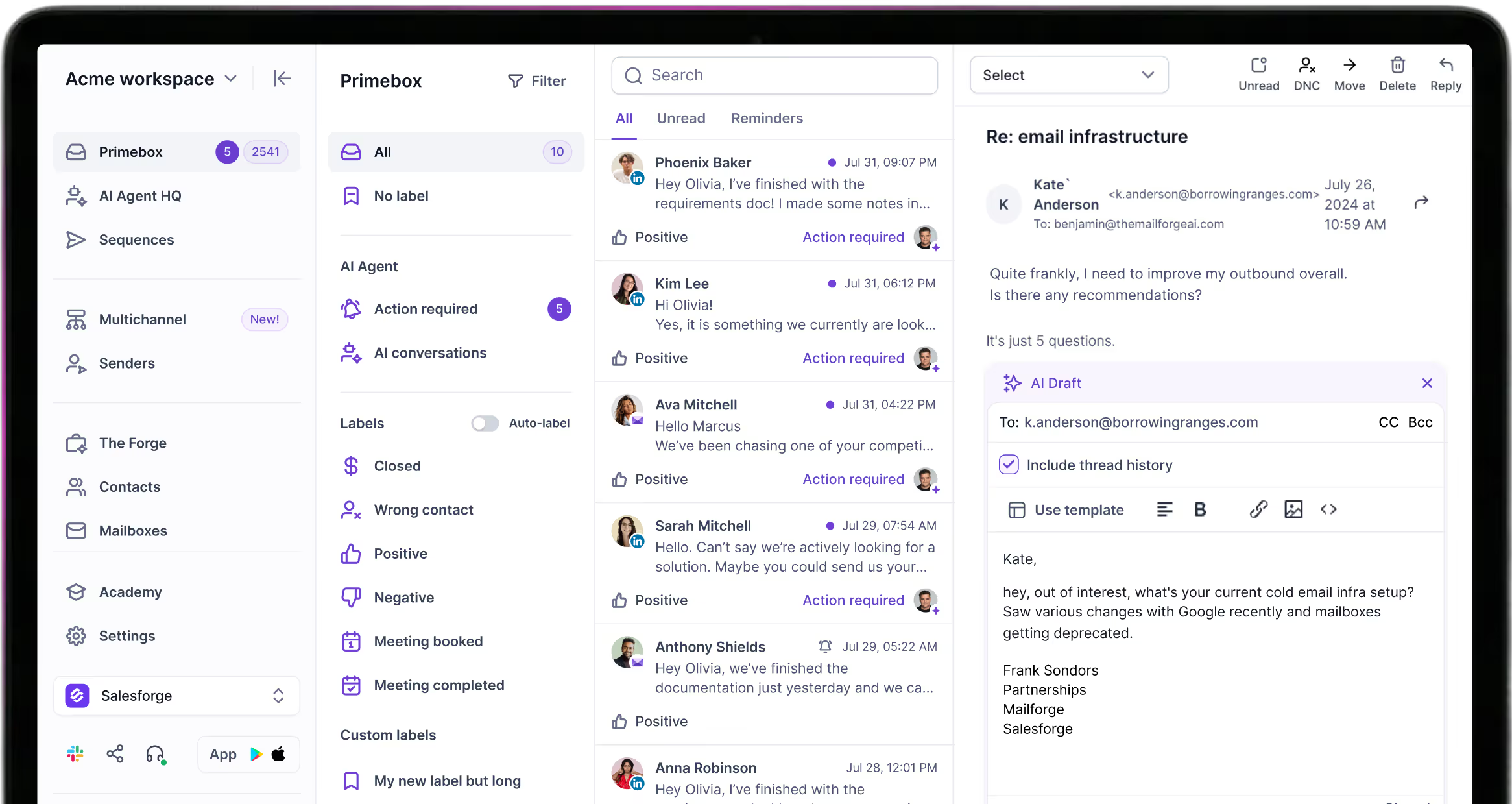
Head-to-Head Feature Comparison: Hypertide vs Mailscale
With the overviews covered, here's where the three genuinely diverge - broken down by the decisions that actually shape outbound performance.
Infrastructure type and IP control
This is the fork in the road. Hypertide builds on Microsoft Azure/Entra with an isolated tenant and a dedicated IP per order - strong isolation, but tied entirely to one platform's rules. Mailscale runs its own SMTP and IP pools, which are shared across customers except on the Unlimited plan. Mailforge uses shared distributed infrastructure by default, with dedicated IPs available through Infraforge when you want them. The practical difference: Hypertide gives you isolation but no escape hatch off Microsoft; Mailforge gives you a shared start with a dedicated upgrade inside the same ecosystem.
Email deliverability and warm-up
All three pre-configure authentication and recommend a warm-up period. Mailscale attaches a 95–100% deliverability guarantee with domain recovery, which is a real differentiator on paper - though the shared-IP volatility some reviewers report is the counterweight. Hypertide runs a two-week warm-up with bulk-update tooling. Mailforge leans on free, unlimited Warmforge warm-up as part of the stack, so warm-up isn't a separate line item or a paid add-on. None of the three can promise inbox placement outright - content, list quality and sending discipline still decide most of it.
Pricing and scalability
Three different philosophies. Hypertide is per order ($50/month, plus the undisclosed setup fee), so scaling means more orders. Mailscale is tiered, which is clean until you hit a boundary and your bill steps up. Mailforge is per mailbox with no tiers, so cost tracks usage in a straight line. I'll be blunt in the pricing section below: Mailforge is not the cheapest at every count. Its scalability advantage is the absence of cliffs and the shared-to-dedicated path, not a lower sticker price. For how this plays out as you grow, see Mailforge's piece on scaling cold email from 100 to 10,000 sends.
Setup speed and ease
Mailscale wins outright on raw speed - under 60 seconds to generate inboxes. Mailforge is close behind at about five minutes with automated DNS. Hypertide is the outlier at four to six hours, a consequence of provisioning isolated Azure tenants. If day-one speed is your single biggest concern, Mailscale leads; if you want fast plus portable, Mailforge is the better balance.
Domains and flexibility
Mailforge is the most flexible here: buy in-app or bring your own, and transfer domains in and out freely - they're yours. Mailscale lets you buy in-app or BYOD at $2/domain, but BYOD voids the deliverability guarantee. Hypertide allows free BYOD or in-app purchase. Domain portability matters more than it looks: it's the difference between owning your sending assets and renting them.
Sending volume and limits
The starkest practical gap. Hypertide guides each inbox to about two emails a day (≈5,000/month per order), so volume comes from inbox count, not per-inbox throughput. Mailforge and Mailscale both support roughly 30–50 emails per inbox per day. If you're sending serious volume per mailbox, Hypertide's model forces a very different (and order-heavy) math than the other two.
Integrations and the Forge Stack
All three connect to the usual sequencers (Instantly, Smartlead and friends). The difference is what surrounds them. Hypertide and Mailscale are standalone - capable, but you assemble the rest of your stack yourself. Mailforge is one node in the Forge Stack: Warmforge for warm-up, Infraforge for dedicated IPs, Primeforge for Google/Microsoft mailboxes, Salesforge for sending. For teams that value a single ecosystem over a toolbox of separate vendors, that integration is the whole point. You can see the full Forge Stack laid out together.
Compliance (SOC 2)
Straightforward: Mailforge is SOC 2 compliant; neither Hypertide nor Mailscale publicly states equivalent certification. If you sell into security-conscious buyers or need to satisfy procurement, that's a meaningful line - and a reason to take infrastructure compliance seriously, as Mailforge's note on avoiding data breaches in cold email infrastructure spells out.
Pricing Comparison
Here's the side-by-side, followed by an honest cost scenario. I want to be upfront: on raw monthly price, Mailforge is not the cheapest at the inbox counts most teams land on. What it offers instead is predictable per-mailbox billing and a stack you won't outgrow.
| Plan basis | Mailforge | Hypertide | Mailscale |
|---|---|---|---|
| Model | Per mailbox | Per order | Tiered |
| Entry | ~$3/mailbox/mo | $50/mo + setup fee | $79/mo (15 inboxes) |
| Mid tier | ~$3/mailbox (toward $2 at volume) | $50/order; stack orders to scale | $119/mo (50 inboxes) |
| High volume | ~$484/mo for 200 mailboxes | Multiple orders | $249/mo (200) / $1,000+ Unlimited |
| Extra inboxes | Per mailbox, no cliff | New order required | $1.50/mo each (Enterprise) |
| Domains | In-app or BYOD; full transfer | BYOD free or buy in-app | ~$10–15/yr in-app; $2 BYOD |
| Free trial | No | No | 7 days |
A 50-mailbox scenario
Say you want 50 sending mailboxes. On Mailscale, the Business plan covers exactly that at $119/month; add roughly $10/month in domains and you're near $129/month. On Mailforge, 50 mailboxes at about $3 each is roughly $150/month plus domains. Hypertide isn't a clean fit for this framing - at ~2 emails/day per inbox it's built around order volume, and you'd add the undisclosed one-time setup fee on top of $50/order.
So at 50 mailboxes, Mailscale is factually the cheaper monthly option, and at 200 its Enterprise tier ($249) undercuts Mailforge (~$484) too. I'm not going to pretend otherwise. The case for Mailforge isn't price - it's that you avoid tier cliffs entirely, you keep your domains, you get free Warmforge warm-up bundled in, you're SOC 2 covered, and you can layer in dedicated IPs (Infraforge) or Google/Microsoft mailboxes (Primeforge) without migrating off your setup. If your decision rides purely on the lowest monthly number, weigh Mailscale carefully. If it rides on flexibility, portability and a stack you won't outgrow, that's Mailforge's territory.
Who Should Use Which
No single tool wins for everyone. Here's the honest matching.
You might consider Hypertide if…
You specifically want Microsoft/Outlook-native inboxes on isolated Azure tenants, you're comfortable scaling by stacking orders, and a flat $50/order price (plus a setup fee) suits how you budget. Just go in clear-eyed about the single-platform dependency and the thin public track record.
You might consider Mailscale if…
You're a solo operator or small team who wants the fastest possible setup, a self-hosted SMTP approach with a deliverability guarantee attached, and the lowest monthly price at common inbox counts. Watch the tier cliffs as you grow and keep an eye on shared-IP deliverability.
Choose Mailforge if…
You want cold-email-built infrastructure with transparent per-mailbox pricing and no tier cliffs, free unlimited warm-up via Warmforge, domains you can transfer in and out, SOC 2 compliance, and a clear path to dedicated IPs or Google/Microsoft mailboxes inside one ecosystem. It's the strongest pick for teams that want to scale without re-platforming.
Final Verdict
All three are real options, and the right answer depends on what you're optimising for. Hypertide is a focused Microsoft play; Mailscale is fast, guarantee-backed and often the cheapest monthly; Mailforge is the flexible, stack-native choice.
For most teams building outbound they intend to grow, Mailforge is the one I'd point to - not because it's the cheapest (it isn't at 50 or 200 mailboxes), but because it's the most durable. Transparent per-mailbox billing without cliffs, free Warmforge warm-up, domain portability, SOC 2 compliance, and a genuine upgrade path through Infraforge and Primeforge mean you're far less likely to hit a wall and have to start over.
And the combined stack has the receipts. UniteSync ran outbound on Salesforge, Mailforge and Warmforge together and recorded an 85.26% positive reply rate at a $2.86 customer acquisition cost - a specific, published number you can hold the platform to, not a vague promise.
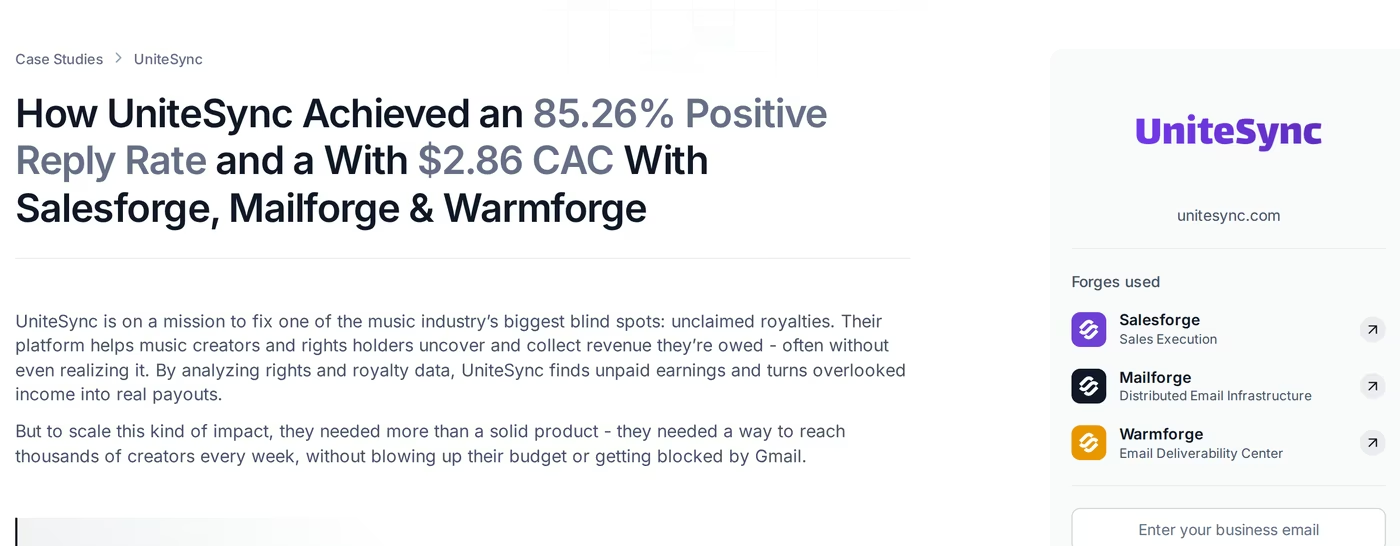
You can read the full UniteSync case study and browse other customer results to gut-check the claim yourself. Pricing details are on the Mailforge pricing page.
FAQ
What's the core difference between Mailforge, Hypertide and Mailscale?
They build inboxes differently. Mailforge uses shared distributed cold-email infrastructure and is part of the wider Forge Stack. Hypertide provisions Microsoft Azure/Entra inboxes in isolated tenants. Mailscale runs its own self-hosted SMTP servers and IP pools. That single difference cascades into pricing, deliverability and how you scale.
Which is the cheapest?
At common inbox counts, Mailscale usually is - its Business plan covers 50 inboxes at $119/month and Enterprise covers 200 at $249/month. Hypertide is $50 per order but adds an undisclosed setup fee and limits each inbox to about two emails a day. Mailforge runs about $3 per mailbox (toward $2 at volume); it competes on flexibility and the bundled stack rather than the lowest sticker price.
Does Mailforge offer a free trial?
No. You buy mailboxes up front rather than starting on a free trial. Mailscale, by contrast, offers a 7-day free trial with a card on file, and Hypertide onboards through a demo rather than a trial.
How many emails can each inbox send per day?
Mailforge and Mailscale both support roughly 30–50 emails per inbox per day after warm-up. Hypertide guides each inbox to about two emails a day, so its volume comes from running many inboxes and orders rather than high per-inbox throughput.
What about deliverability guarantees?
Mailscale advertises 95–100% deliverability to Google and Outlook with 30-day domain recovery and free domain replacement below 80% placement. Mailforge leans on free unlimited Warmforge warm-up within the stack instead of a headline guarantee. No provider can truly guarantee inbox placement, since content, list quality and sending behaviour drive most outcomes.
Can I bring my own domains?
Yes with all three. Mailforge lets you bring or buy domains and transfer them in and out freely. Mailscale allows BYOD at $2/domain but voids its deliverability guarantee for those domains. Hypertide allows free BYOD or in-app purchase.
Is Mailforge SOC 2 compliant?
Yes. Mailforge is SOC 2 compliant. Neither Hypertide nor Mailscale publicly states equivalent certification, which can matter when you're selling into security-conscious buyers or clearing procurement reviews.
What if I need dedicated IPs or Google/Microsoft mailboxes later?
This is where the Forge Stack helps. With Mailforge you can start on shared infrastructure and add dedicated IPs through Infraforge, or genuine Google/Microsoft 365 mailboxes through Primeforge, without migrating off your setup. Hypertide is already Microsoft-centric with dedicated IPs per order; Mailscale offers dedicated IPs only on its Unlimited plan.