You're probably comparing three or four cold outreach tools right now, and Lemlist keeps showing up near the top of every list you read.
That's fair, it has been in this space since long and is popular for it’s visual personalization before most competitors even had a sequence builder.
But you're not here to know all this.
You actually want to know how the features actually work, what the pricing math looks like once you add users, and whether it's still worth paying for in 2026.
So I signed up. I ran the trial for the full 14 days, hit the trial-expired wall, and kept exploring around afterward to see what still worked and what got locked.
This detailed review covers the features I clicked through myself, real pricing across every plan, honest pros and cons, and a clear call on who Lemlist is built for and who should look elsewhere.
Let's get into it.
Lemlist is a sales engagement platform that runs cold outreach across email, LinkedIn, calls, SMS, and WhatsApp from a single dashboard. The pitch is that you don't need to stitch four tools together to run a multichannel campaign.
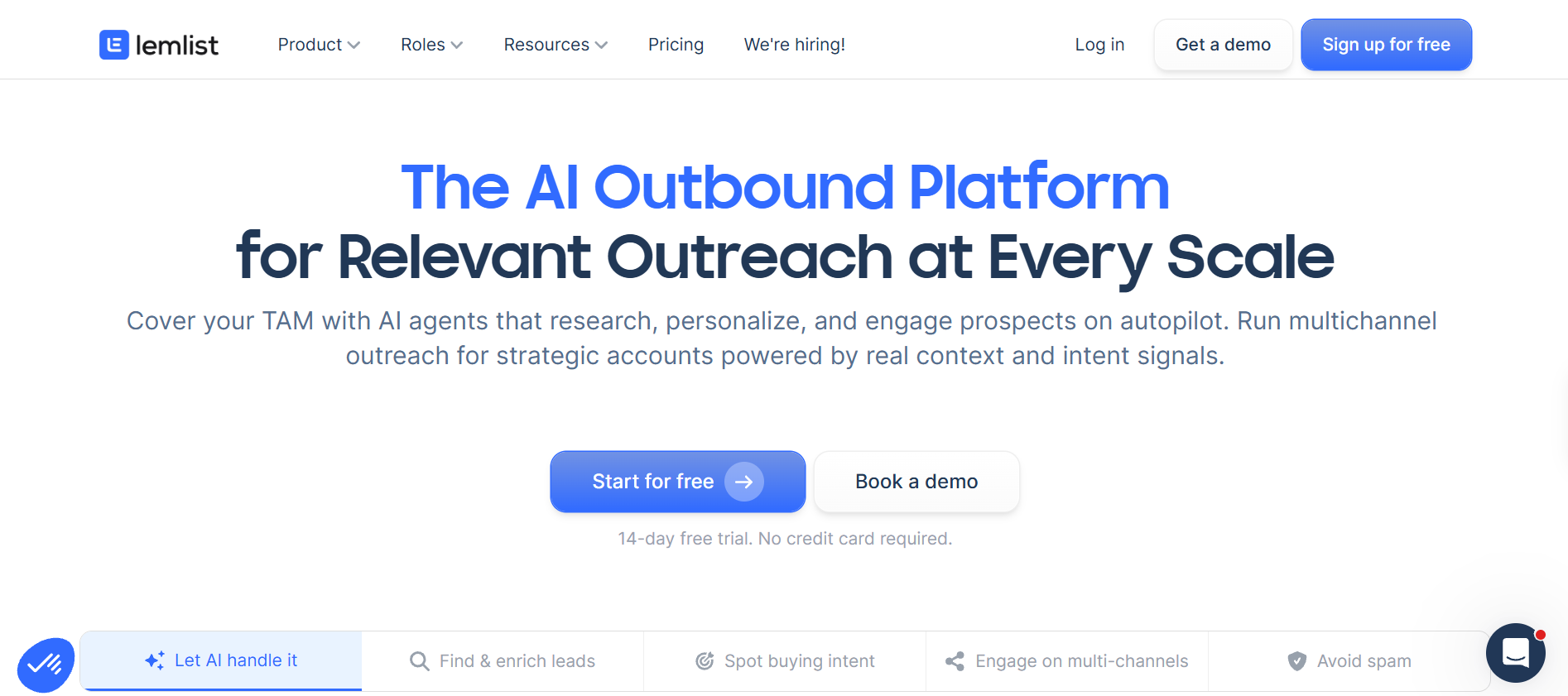
It sits in the same category as other cold email tools like Instantly, Smartlead, and Salesforge, but it leans harder into the multichannel side than most.
Lemlist was founded in 2018, is headquartered in Paris, and their homepage claims 20,000+ sales teams currently run outbound through the platform.
I went through Lemlist in the same order most trial users would, starting from the sequence builder and working outward. Here is what I found at each step.
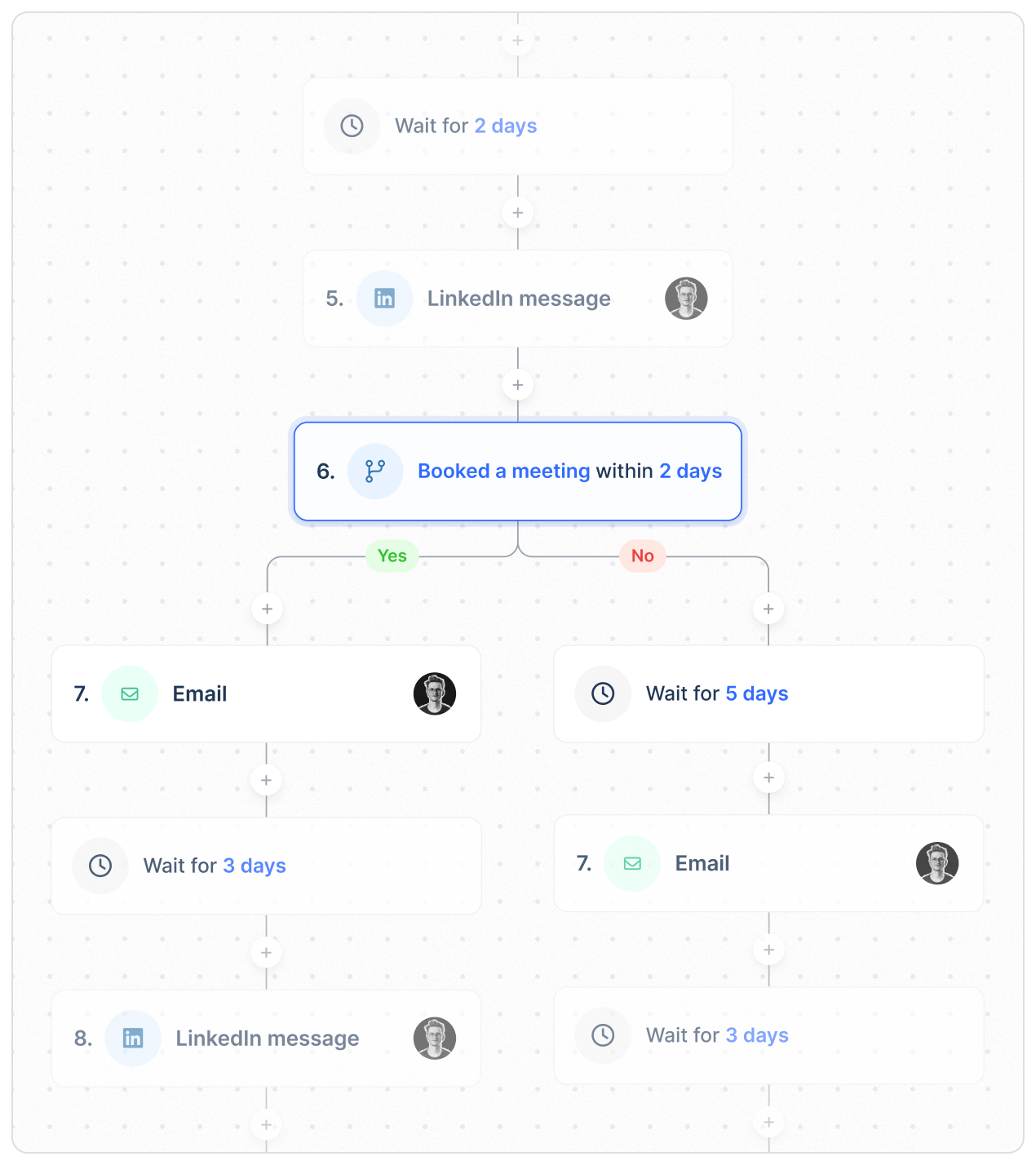
The first thing I tested was the sequence builder, because it's the core of Lemlist and where most of your day-to-day work happens. You drag steps into a workflow, mix email with LinkedIn actions, add wait times, and set conditional branches.
But the moment I clicked "+ Add step" on my Email plan trial, I hit a wall. Email is the only unlocked step type. Every LinkedIn action sits behind a lock icon, including Chat message, Visit profile, InMail, Invitation, Withdraw invitation, Follow user, Like or comment last post, and Endorse skill. Voice message, AI Voice message, and WhatsApp chat are all locked too.
The AI Voice message step caught my attention because it isn't documented anywhere on Lemlist's marketing site. It's a separate feature from the human voice-cloning feature everyone talks about. Lemlist essentially ships a second AI-generated voice note step inside the product without promoting it publicly.
So if you're comparing Lemlist against other email sequence software, know this upfront. The Email plan is more restrictive than the marketing suggests. You get email steps only, nothing else.
Next, I tested Signal Agents, which is Lemlist's big AI push for 2026. The marketing pitch is "one system, three agents, zero manual work," with three AI agents that find buying signals, contact prospects with personalized outreach, and optimize your setup every week.
Here is what actually shipped. When I opened the Signal Agents section, only Scout was live. Both Engage and Optimize were tagged "Coming soon" right inside the product UI. The same screen even names competitors directly by saying, "Tools like Bombora, 6sense, and Cognism detect buying intent. But they stop there."
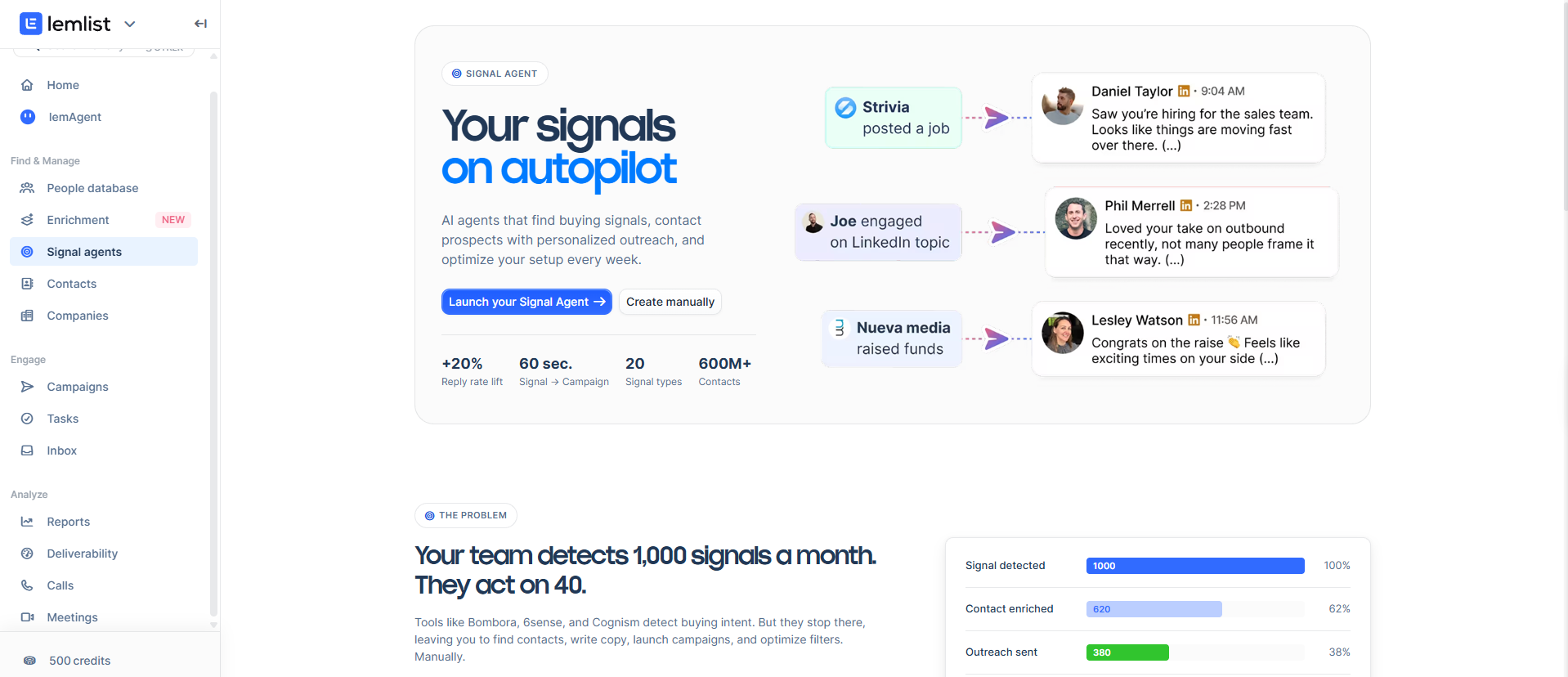
That's a real gap for anyone making a buying decision this quarter based on the multi-agent pitch. You're paying for a feature that ships one third of what's promised, and there's no publicly committed timeline for the other two.
After that, I moved into Lemwarm and the Deliverability Hub, because warm-up is where most cold email tools either shine or quietly fail. This is where Lemlist genuinely delivers.
The dashboard has five tabs: Warm-up, Outreach, Inbox placements, Alerts, and Settings. The Inbox placements tab breaks down scores by Global, Google, Microsoft, and SMTP-IMAP mailboxes separately, with a "Run inbox placement test" button that gives you a live check.
Settings has "Buy domain and mailboxes," "Team settings," and "Run tech setup audit," all matching what the marketing page claims. The whole tab carries a disclaimer that reads "All metrics in this tab are sourced directly from lemwarm," which is a small but nice trust signal.
If you want to understand why bundled warm-up matters, this piece to improve cold email deliverability rates covers the fundamentals. Lemwarm handles two of them out of the box, which is more than most competitors bundle at this price point.
Then I explored around the Unified Inbox, because reply management is where multichannel tools usually get messy. Lemlist threads replies across email, LinkedIn, WhatsApp, and SMS into a single view, and you reply from one place regardless of channel.
I tested this post-trial and it stayed accessible even in an empty state. That's a small but meaningful signal that Lemlist doesn't lock your reply management the moment your trial ends. You can still access conversations mid-cancel, which matters if you're running an evaluation across multiple tools.
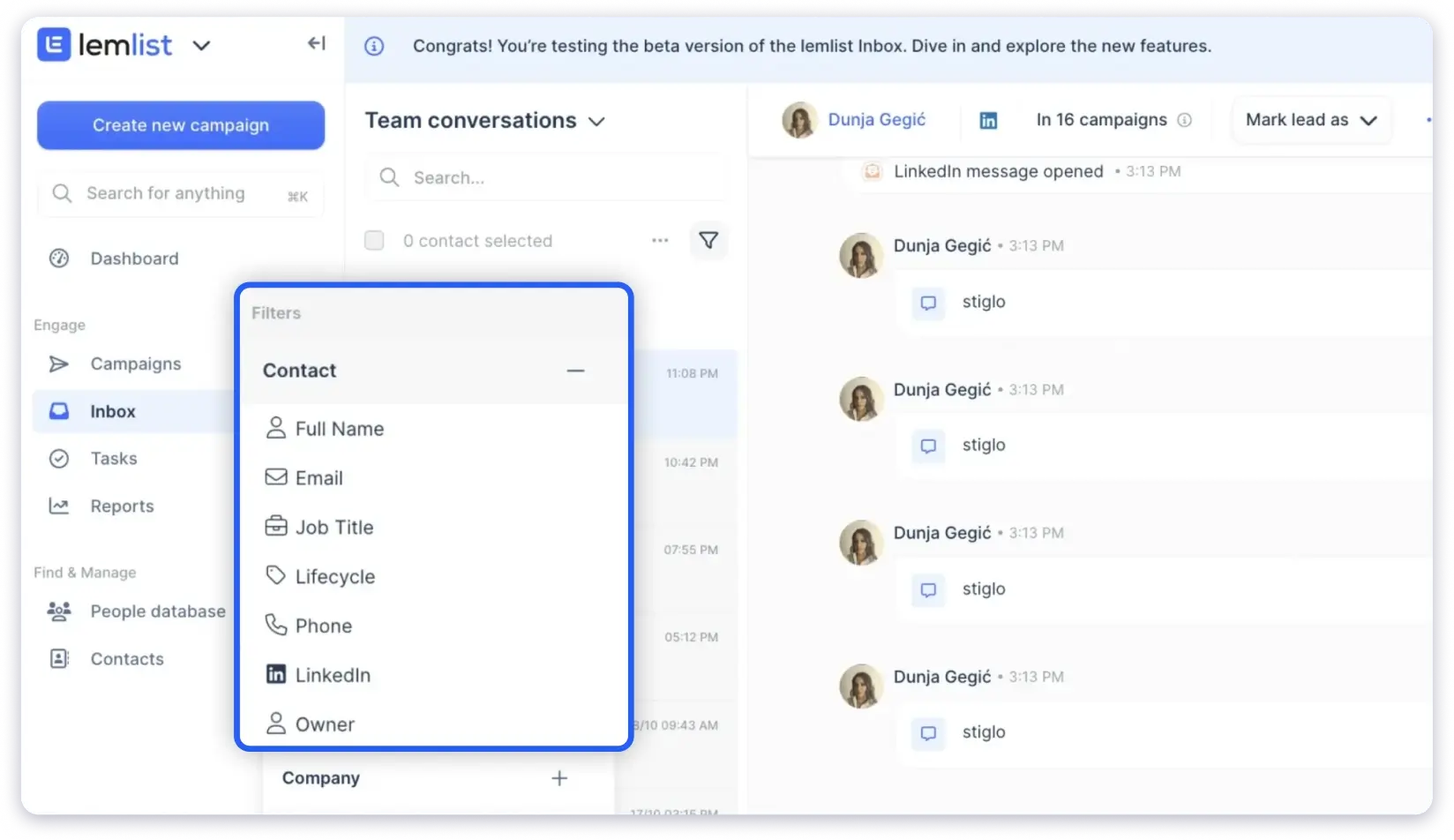
The AI classifies incoming replies as Interested or Uninterested automatically, which sounds useful, but I couldn't test it in depth because my trial account didn't have active conversations rolling in.
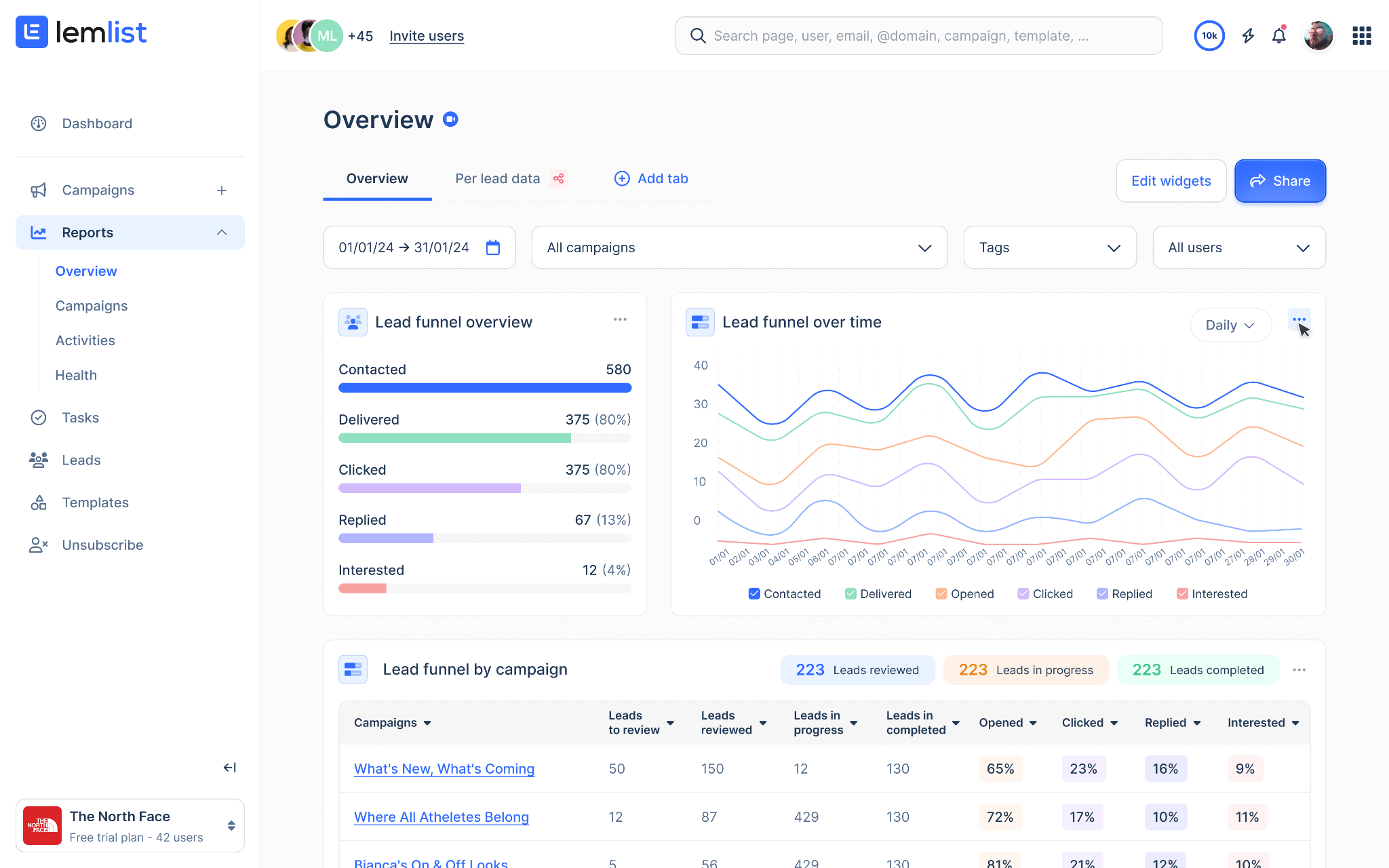
The next feature I tested was the Reports dashboard, and this one surprised me. I expected it to be thin based on the marketing site alone, but I was wrong.
It's a full customizable BI-style dashboard with widgets you can edit, multiple report tabs, filters by tags, campaigns, and users, and lead-funnel charts. You can share reports out too, which matters for agencies handling client reporting or sales leaders reporting up to leadership.
If you're setting benchmarks, this breakdown of average cold email response rates gives you a sense of what your Lemlist reports should actually be showing. Anything below industry average is a signal your setup needs work, not that the tool is failing.
Honestly, this is the feature Lemlist's own marketing undersells the most. Their site talks about it in passing, but the actual dashboard holds up against dedicated reporting tools.
After Reports, I tried lemAgent, which is Lemlist's AI layer for generating sequences, finding lead details, and turning intent signals into contextual messages. The pitch is real, but the trial experience is aggressive.
I clicked into the AI campaign generator with a prompt of "Build a multichannel outreach sequence from scratch." What I got back was, "Upgrade to a paid plan to use lemAgent. You are currently in read-only demo mode."
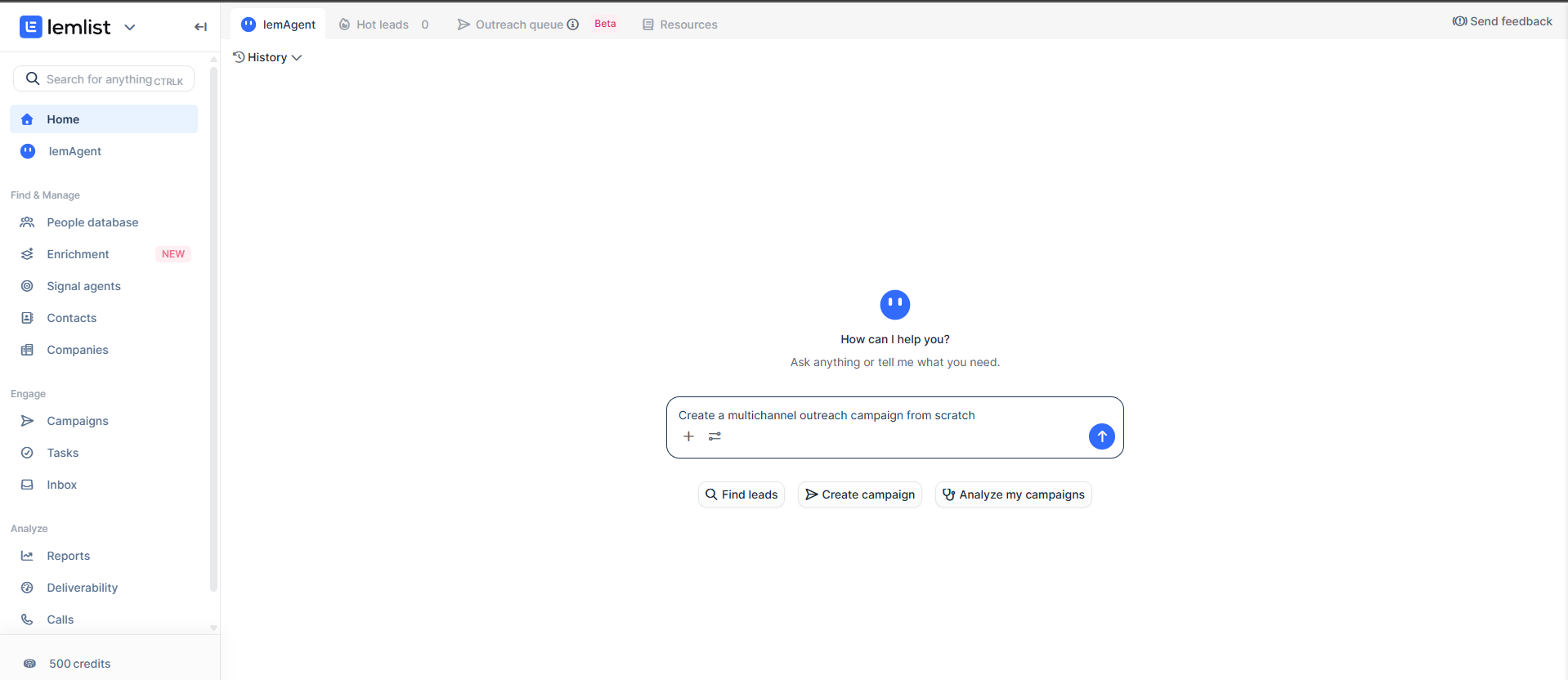
That's fair from a business standpoint, but it means you cannot fully evaluate the AI features before committing to a plan. If lemAgent is the reason you're considering Lemlist, you'll need to book a demo to see it work end to end.
The last thing I tested was the lead database and enrichment. Lemlist claims 650M+ contacts with email finder, phone finder, and waterfall enrichment, which is a big database and competitive with most standalone lead tools.
But when I clicked People database or Enrichment post-trial, I hit "This page is locked due to billing" and got bounced back to Home. Same pattern as lemAgent, no read-only preview, just a hard lock.
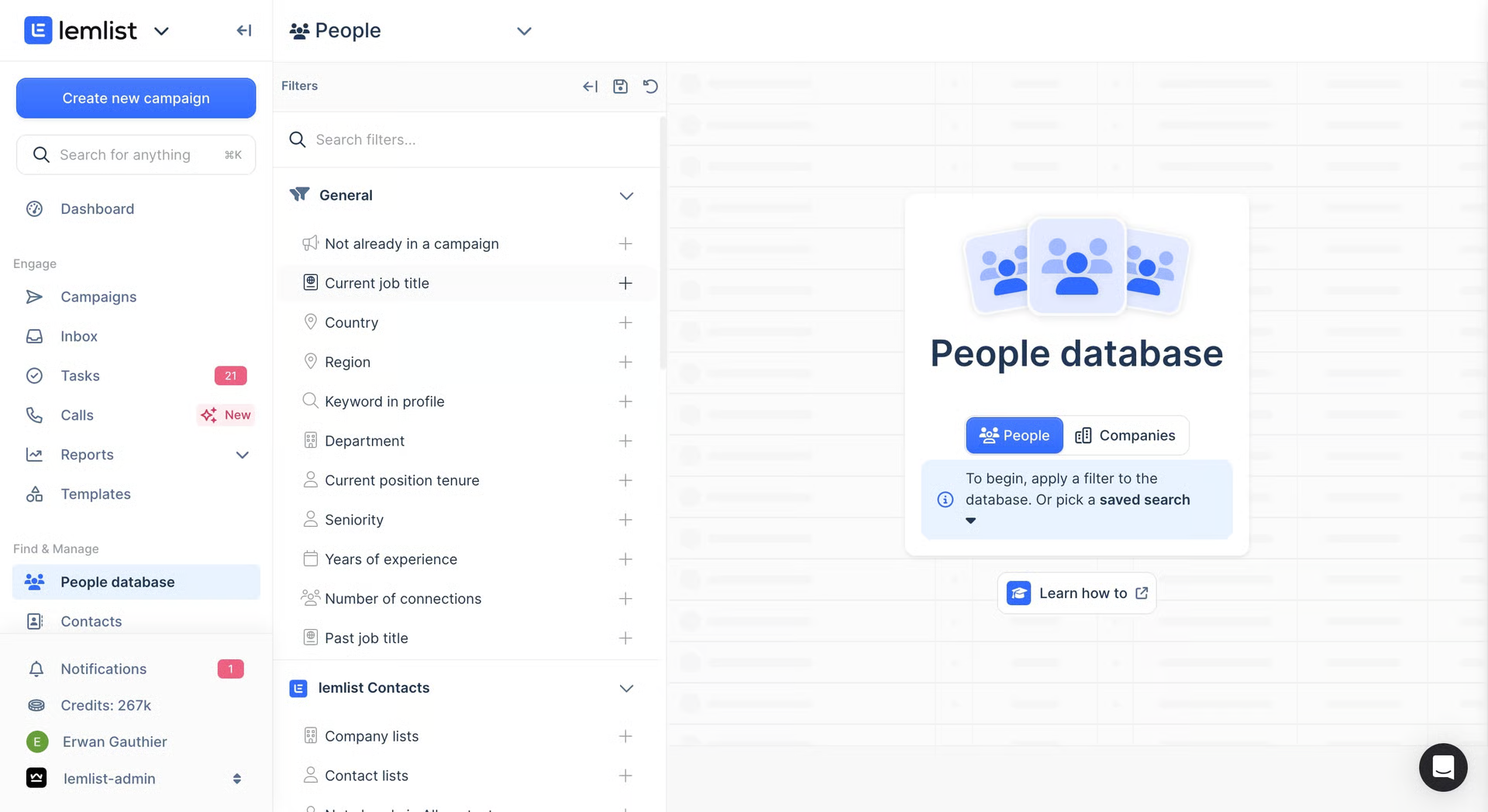
The enrichment runs on credits, not included volume, so the real cost lives in the credit math I'll break down in the pricing section next.
Now for the part most reviews handle poorly. Here is the real pricing math, not the "starting at" language on the pricing page.
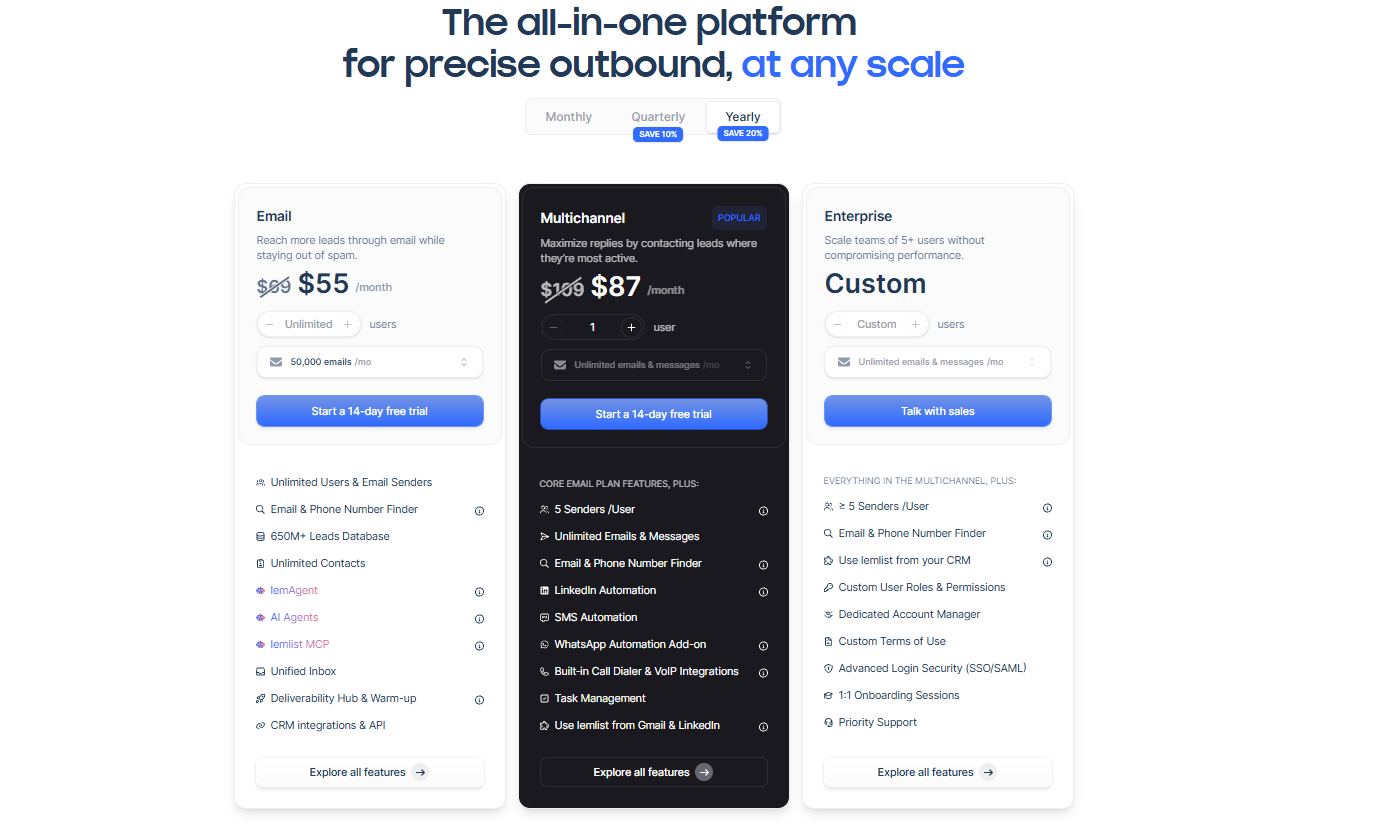
The Email plan is $69/month or $55/month billed annually. It gives you unlimited users, email and phone finder, 650M leads database, lemAgent, AI Agents, lemlist MCP, Unified Inbox, Deliverability Hub with Lemwarm, and CRM integrations plus API.
What you don't get is every non-email channel. No LinkedIn, no calls, no SMS, no WhatsApp. If your outreach motion is strictly email, this plan works. If you want anything multichannel, you're paying more.
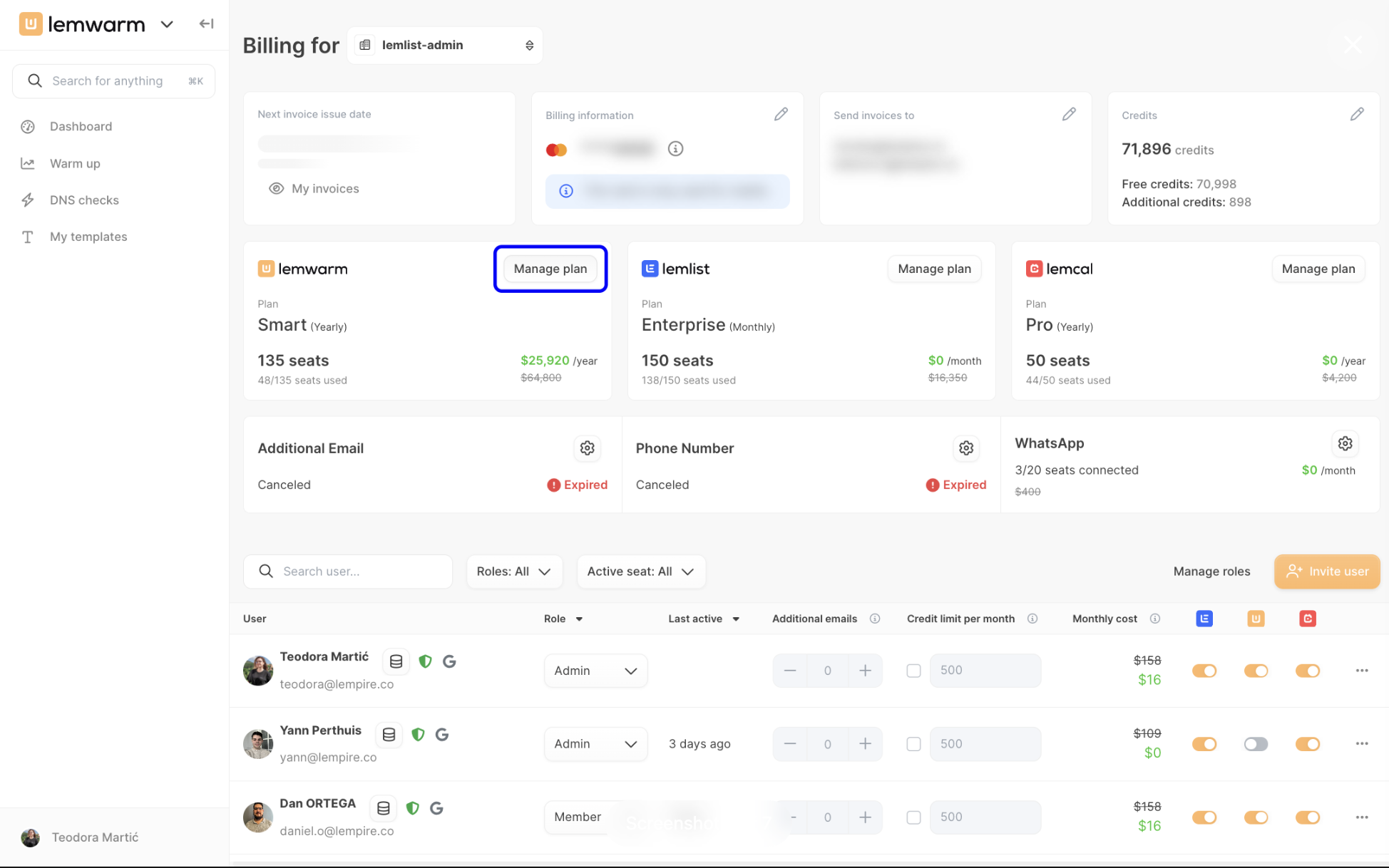
Multichannel is $109 per user per month or $87 per user billed annually. On top of everything in Email, you get 5 senders per user, unlimited emails and messages, LinkedIn automation, SMS automation, a WhatsApp add-on (price not published anywhere I could find), built-in call dialer with VoIP integrations, and task management.
Here is the per-seat math that matters. A 3-person team on annual is $261/month. A 5-person team is $435/month. A 10-person team hits $870/month before you touch a single credit.
That scales fast, and if you're mapping out volume against that spend, this piece on how many cold emails to send daily per domain helps you sanity check whether the throughput justifies the seat cost.
Enterprise is quote-only for teams of 5+ users. You get everything in Multichannel plus a dedicated account manager, custom terms of use, SSO/SAML, 1:1 onboarding, and priority support.
There's no public pricing, which means you're negotiating. If you have leverage like a multi-year commit or a larger seat count, you can push the per-seat rate down from the sticker $109.
Lemlist runs a pay-per-success credit model on top of your plan. 1 credit equals $0.01.
Here is what things cost in credits:
Rough math: 1,000 credits costs $10 and gets you 200 verified emails or 50 phone numbers. That's fair pricing for the volume, but the intent signal costs add up fast if you're running signal-based prospecting at scale.
The free trial is 14 days with full Multichannel access and no credit card required. That's generous for the category.
But the post-trial lock is aggressive. Once your trial expires, campaigns lock with a "Your lemlist trial has expired" banner. The sequence builder goes into read-only demo mode. People database and Enrichment throw the "This page is locked due to billing" message and bounce you back to Home.
What stays accessible is the Unified Inbox and Contacts, both in an empty state. So you can log in and see your account, but you cannot keep evaluating the tool without paying.
This is the part most reviews skip, and it matters. Lemlist's annual plans are a 12-month non-cancellable commitment per their Terms of Service.
The exact language reads, "the Minimum Annual Fee is non-cancelable and non-refundable for any reason whatsoever."
Unused credits expire without refund. And there's a small quirk that hints at how recently Lemlist restructured their plans. Their Terms of Service and one product FAQ still call the mid-tier plan "Multichannel Expert," but the live pricing page now just calls it "Multichannel." The legal docs haven't caught up with the rebrand yet.
That's not a red flag, but it's worth knowing you're locking into 12 months of billing on a plan whose name changed recently enough that the legal team hasn't updated the paperwork.
Here is what genuinely works about Lemlist after two weeks of testing.
And here is what I'd push back on, honestly.
Here is the honest call on fit, based on what I actually tested and what the pricing math forces.
Salesforge is the best Lemlist alternative because it removes the per-seat cost model and gives you unlimited mailboxes and LinkedIn senders on a flat plan.
That's the biggest structural difference between the two tools. Lemlist charges per user, so growing a team means growing the bill linearly. Salesforge charges a flat rate, so you can add senders without watching the invoice climb.
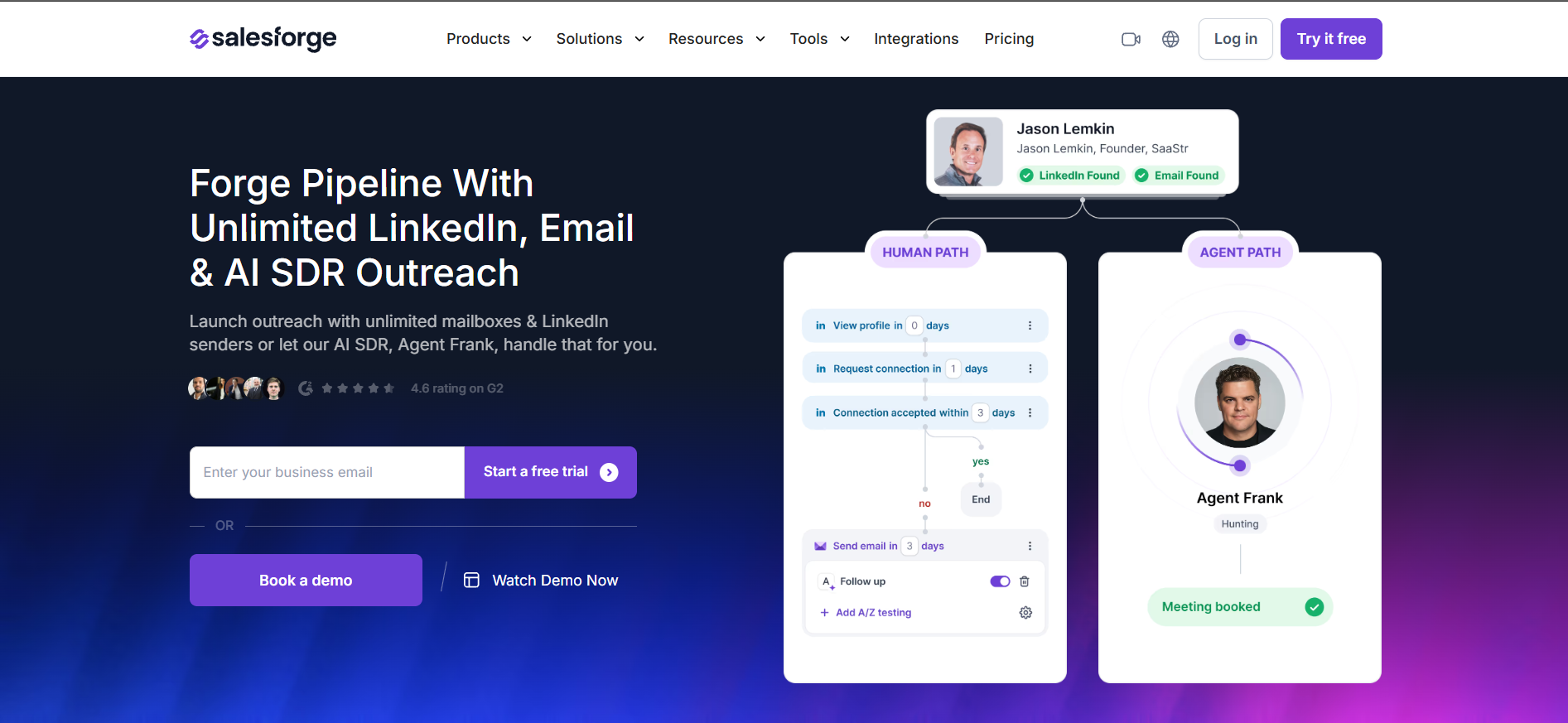
Salesforge is positioned as an all-in-one outbound stack. You get email plus LinkedIn sequences from a single platform, unlimited mailboxes, unlimited LinkedIn senders, Primebox for unified replies, A/Z testing for variant experiments, and built-in warm-up via Warmforge. For teams that want the autonomous prospecting layer, Salesforge also offers Agent Frank as an AI SDR add-on, so you can hire him to handle prospecting and outreach without adding another human SDR to the payroll.
Where Lemlist still holds ground is visual personalization. Custom images and video overlays are more polished in Lemlist today, and if that's your primary differentiator in outbound, Lemlist wins there.
Lemlist is worth it if you're a small multichannel team that values a polished UI and visual personalization, but the per-seat pricing and 12-month lock make it a hard sell for scaling teams.
The features that work (Lemwarm, Reports, personalization) genuinely deliver, and the Unified Inbox is one of the best in the category. But Signal Agents shipping one of three promised agents is a real gap, and the annual commitment on a fast-changing product is a lot to ask.
Two kill conditions reverse this call. If your team is scaling past 5 seats, the Multichannel per-user pricing will hurt fast. If you want to trial multiple tools in parallel without paying, Lemlist's post-trial lock forces your hand.
If you're a small team that wants a polished multichannel experience, trial it for the full 14 days, then decide before the annual commit kicks in.
Lemlist is worth it for small multichannel teams (1 to 5 users) that want visual personalization, bundled warm-up via Lemwarm, and a clean UI. It's harder to justify for larger teams because the per-seat pricing scales linearly and the annual plan locks you into 12 months of non-refundable billing.
Lemlist has three plans. Email is $69/month ($55/month annual) with unlimited users. Multichannel is $109 per user per month ($87 annual). Enterprise is custom pricing for teams of 5+. On top of the plan, you pay credits for email verification (5 credits each), phone numbers (20 credits each), and intent signals (20 to 400+ credits each), where 1 credit equals $0.01.
Lemwarm is Lemlist's built-in email warm-up tool, bundled into every plan. It gradually sends and receives emails from a network of other Lemwarm mailboxes to build your sender reputation. The Deliverability Hub tracks your warm-up progress, inbox placement scores by provider (Google, Microsoft, SMTP-IMAP), and alerts you when your setup needs attention.
No. Lemlist's Terms of Service state that "the Minimum Annual Fee is non-cancelable and non-refundable for any reason whatsoever" on annual plans. Monthly plans can be cancelled at the end of the billing cycle. Unused credits also expire without refund.
Yes. Lemlist offers a 14-day free trial with full access to the Multichannel plan and no credit card required. After the trial expires, campaigns lock and most features go into read-only mode, but you can still access the Unified Inbox and Contacts in an empty state.
Once the trial ends, you see a "Your lemlist trial has expired" banner on the campaigns page. The sequence builder switches to read-only demo mode, People database and Enrichment lock with a "This page is locked due to billing" message, and lemAgent is disabled. The Unified Inbox and Contacts stay accessible but empty, so you can log in but cannot resume evaluating the tool without upgrading.