When cold email stops performing for you, the tool is usually the first thing that gets blamed. I get it.
I have done the same thing. I switched platforms three times before I realized the problem was on my side.
Here is the thing. Salesforge is one of the strongest cold email outreach platforms on the market today. If it is not working for you, the tool is probably not the reason. More often than not, the issue is your strategy.
And switching tools will not fix that. Before you move to a new platform, it is worth having a Salesforge cold email expert audit your setup. Most experienced outbound teams do that before deciding to switch.
But if you have already done that and Salesforge still is not the right fit, here are the three alternatives worth considering in 2026.
Let's break them down.
For readers in a hurry, here is how the four platforms compare on the dimensions cold email teams actually care about. If you want the full breakdown on each tool, jump straight to its section below.
Salesforge is the only platform above that ticks every box.
That is not because the other three are weak. It is because Salesforge covers the full outbound stack, while the rest solve for one or two pieces.
If you want to look beyond this table, my breakdown of the best cold email tools I have tested is worth reading next.
Salesforge is used by more than 10,000 businesses today, from bootstrapped founders to enterprise outbound teams. That number gets thrown around a lot, so the reasons behind it are what actually matter.
I went through recent G2 feedback and Reddit threads to see what active users are saying. Here is what kept coming up:
And it is not just talking points. Here is what real reviewers had to say.
1. One reviewer described how Salesforge replaced the Instantly plus HeyReach combo their team was juggling, with everything from infrastructure to LinkedIn outreach running under one login.
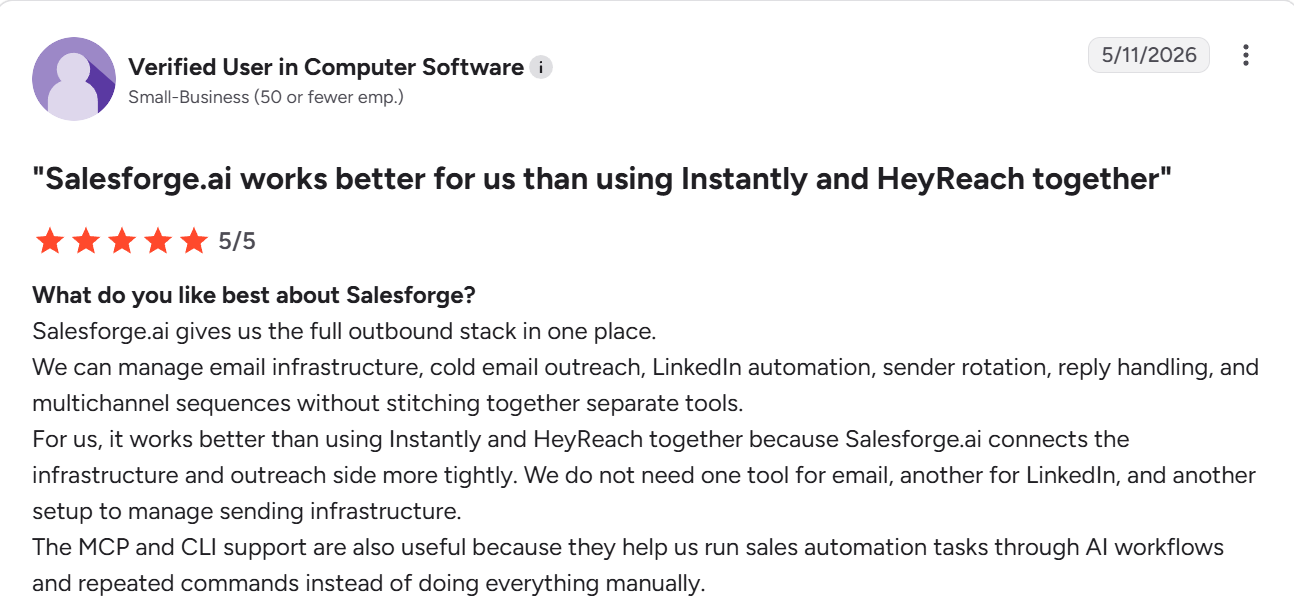
Source: G2
2. Another reviewer called out the unlimited sender accounts as the single feature that let their team scale outreach without babysitting account caps.
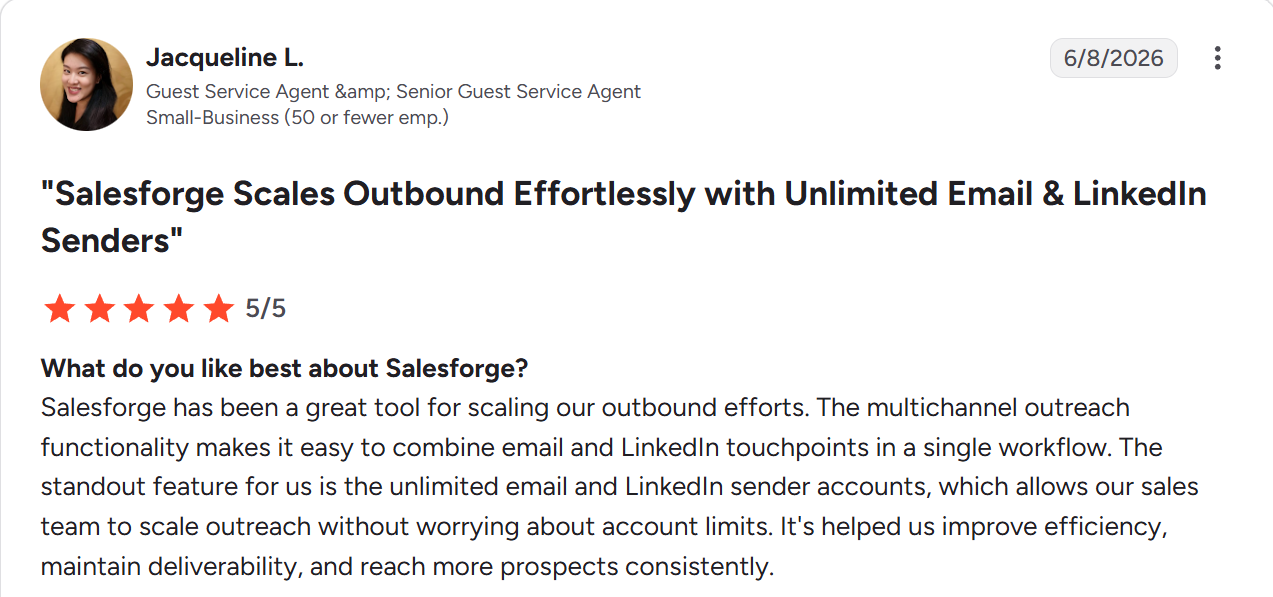
Source: G2
3. A third talked about how AI personalization and multi-mailbox campaigns lifted their reply rates and booked meetings, with HubSpot syncing cleanly on top.
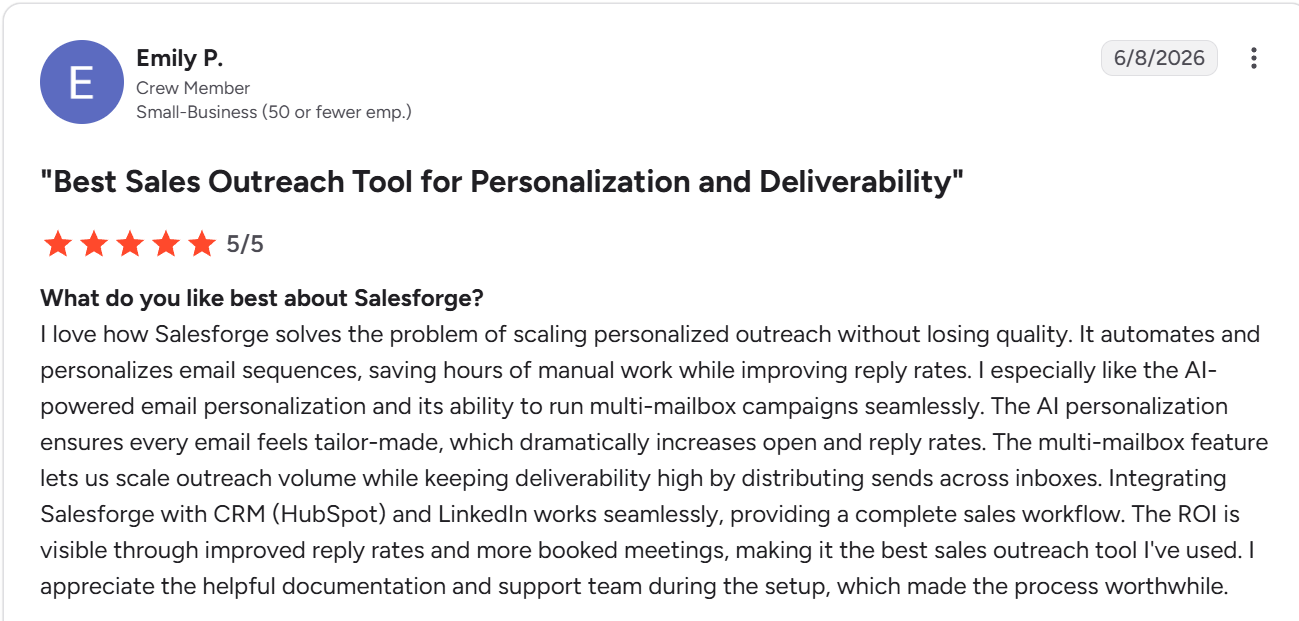
Source: G2
4. And this one appreciated the all-in-one stack, from buying domains and mailboxes to warming them up and moving them straight into outreach, as the reason they picked Salesforge over other platforms they tested.
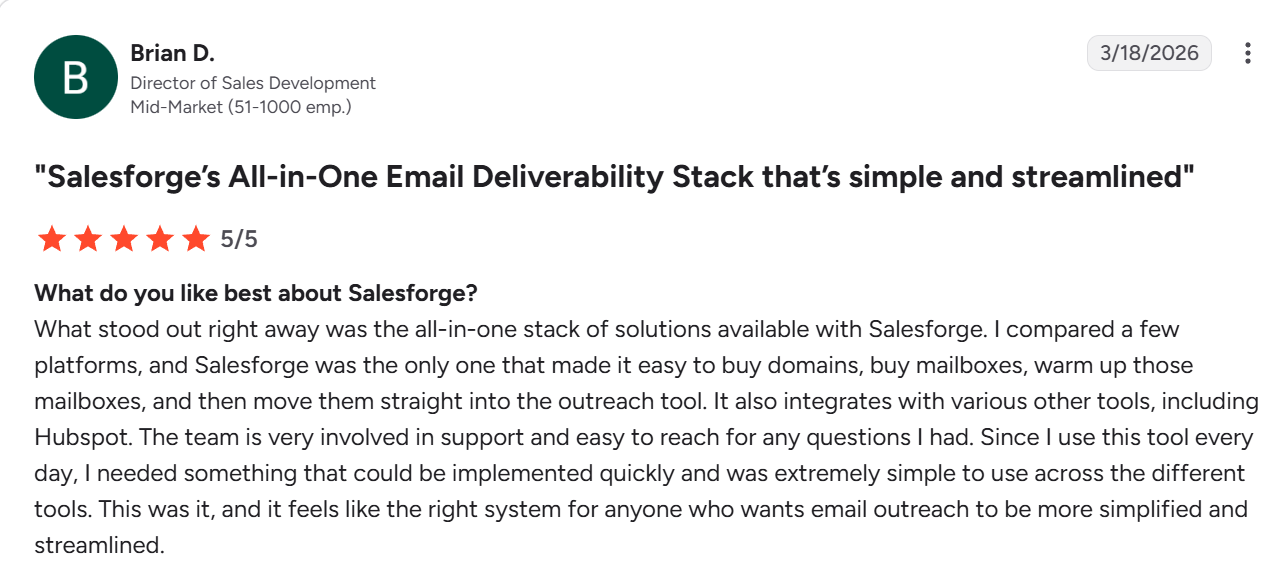
Source: G2
Update: Salesforge recently rolled out Agent Frank in Auto-Pilot mode. He is an AI SDR who runs prospecting, writes emails, and follows up on his own. Teams that hire Agent Frank also get a dedicated Account Manager for setup and ongoing optimization.
If you are running Salesforge and not seeing the results you expected, the team offers hands-on support to review your setup. Most of the time, the fix is on the infrastructure or list side, not the platform.
But if you have already worked through that and still want to explore other platforms, the next section is for you.
Here is where I break down three of the strongest Salesforge alternatives on the market today. I have used all four platforms covered in this piece, so what follows is what I would tell a friend who asked.
What almost made me skip Lemlist is the per-seat pricing. What kept it here is the personalization depth. No other platform in this comparison comes close.
Lemlist pioneered dynamic images, personalized landing pages, and now AI-generated LinkedIn voice notes. The first cold email I ever received that had a screenshot of my own website embedded in the body was from a Lemlist user. I stopped and actually read it.
The Multichannel plan runs email, LinkedIn, calls, WhatsApp, and SMS in one sequence. That range is genuinely useful for outbound teams selling into markets where email alone falls short. lemwarm, the built-in warmup tool, ships with every plan.
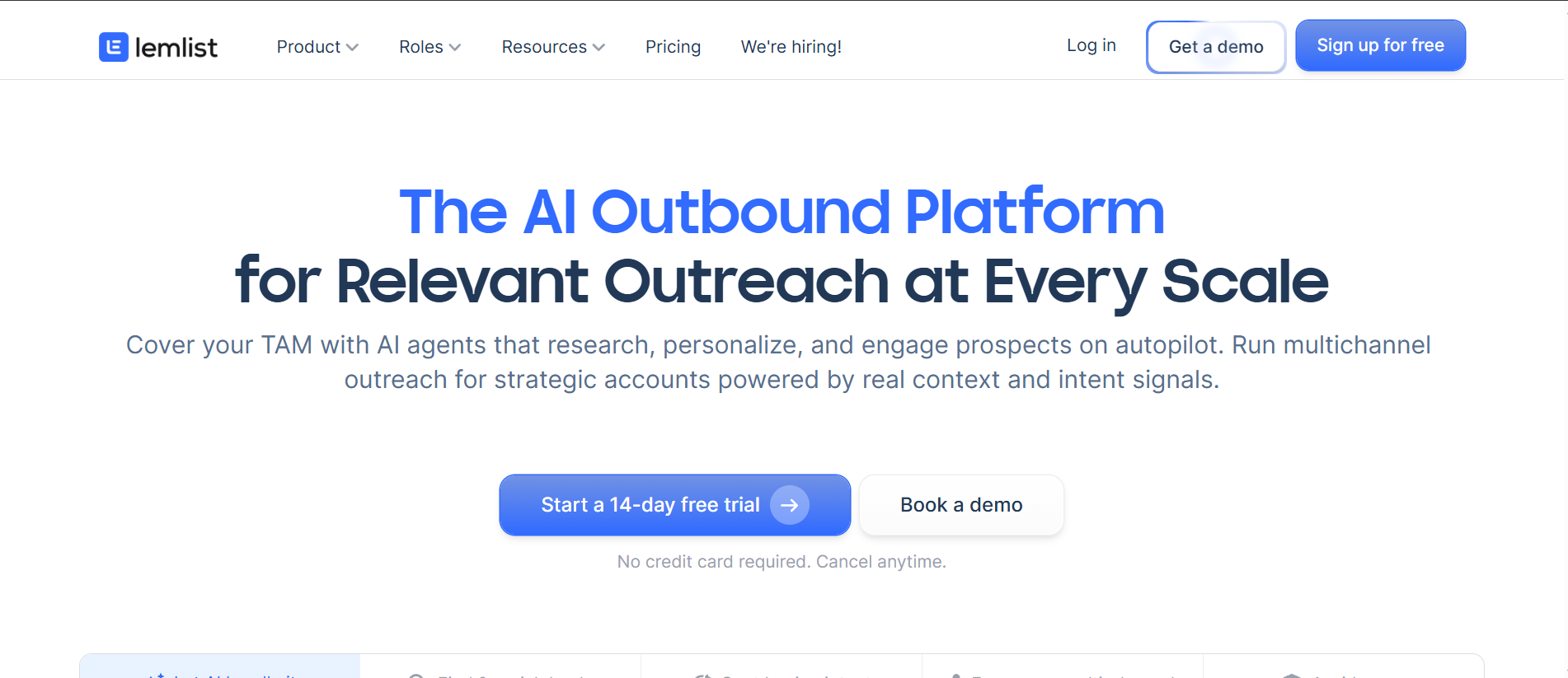
The catch is cost at scale. Lemlist is priced per user, so a five-person team hits serious monthly spend fast. Some G2 users have also flagged deliverability dips at higher volumes. If deliverability is a concern with any tool you are testing, this guide on ways to improve cold email deliverability rates is worth a read.
Check out these Lemlist Alternatives
When my sending volume crossed 4,000 emails a day last quarter, Smartlead came up in every conversation I had with agency owners. It is the platform most cold email agencies I know default to for high-volume client programs.
Smartlead treats cold email as an infrastructure problem. That is why unlimited mailboxes, master inbox, and inbox rotation sit front and centre. The interface is not the prettiest. But the depth of controls is where it wins over experienced senders.
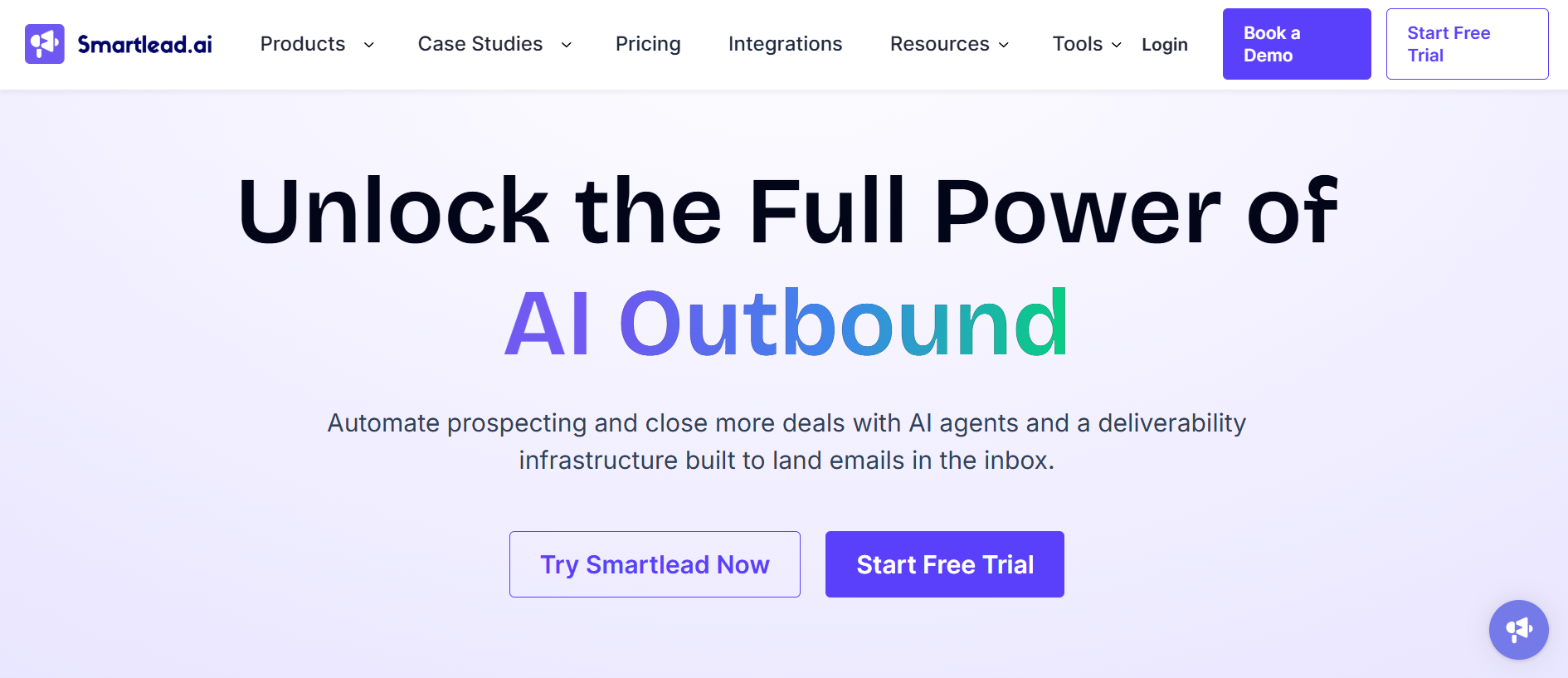
The Master Inbox pulls replies from every connected mailbox into one screen. For agencies managing 20+ client campaigns, that alone saves hours a week.
The gap is LinkedIn. Smartlead is email-only, so if your outreach depends on hitting prospects across channels, you need a second tool. Since Smartlead expects you to bring your own domains and mailboxes, pairing it with the right cold email infrastructure tools is critical to your results.
Instantly runs the largest warmup pool in the cold email market, with over 4 million connected accounts.
That single fact is why so many high-volume senders land here before considering anything else.
I tested Instantly on a 90-day trial with a 12-mailbox setup last year. What worked was the simplicity.
The Growth plan gives you unlimited email accounts, built-in warmup, and campaign automation for under $50 a month. For solo founders and small teams, that entry point is hard to beat.
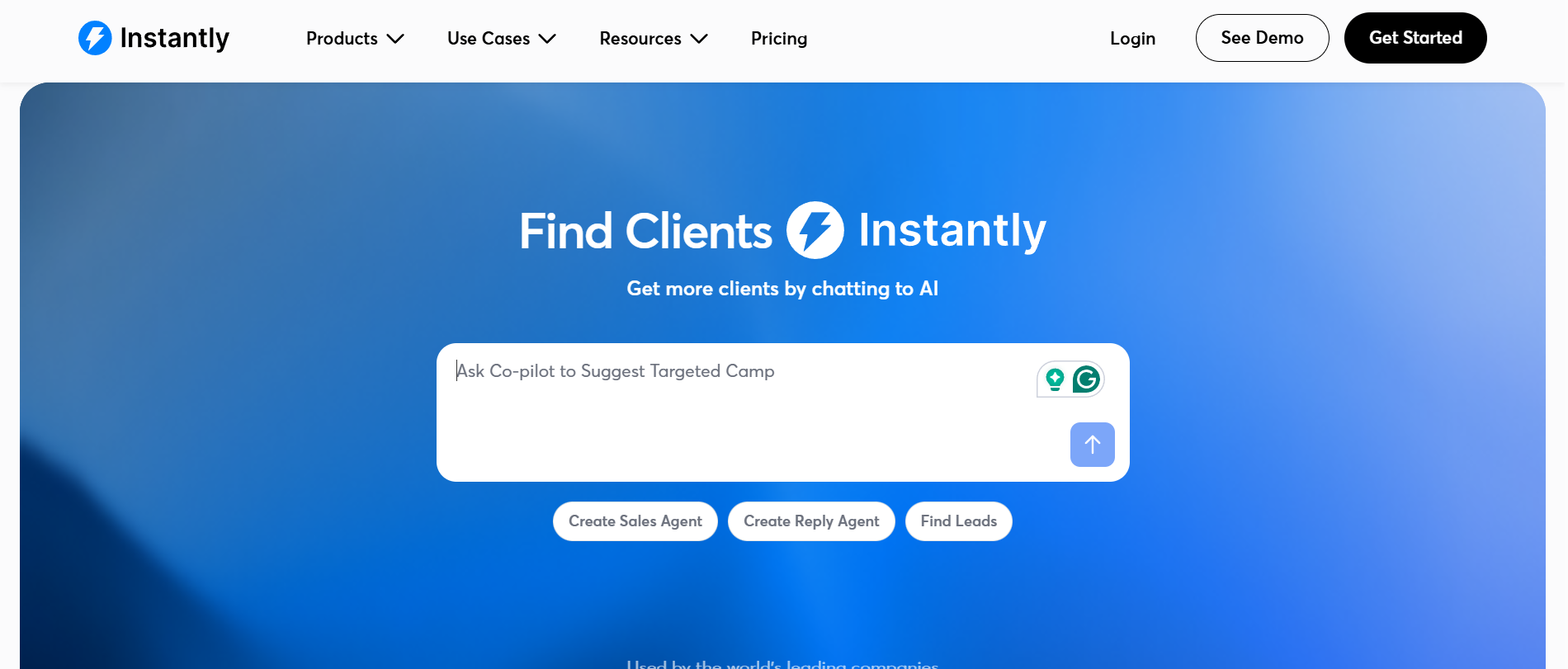
What did not work for me was the ceiling. The Growth plan caps contact uploads at 1,000, which caught me off guard when I tried to scale. LinkedIn is not on the platform, so multichannel outreach needs a second tool. Some of the more useful features sit behind the $358 Light Speed tier.
If you are pushing send volume high, it is worth checking how many cold emails to send daily per domain so you protect your sender reputation before scaling up.
Check out these: Instantly Alternatives
Those are the three Salesforge alternatives I would actually consider in 2026. Lemlist for personalization depth. Smartlead for agency-grade email at volume. Instantly for the cheapest entry into warmup and unlimited accounts.
But before you switch, my honest advice stays the same. If you have not tried hiring an outbound expert to audit your Salesforge setup, do that first. Most of the time, results shift once the strategy does.
If the audit says the tool really is the problem, then pick from the three above with confidence.
Salesforge is worth it if you run outbound at scale and want email, LinkedIn, and AI SDR outreach on one platform with flat-rate pricing. Teams sending under 500 emails a month or those needing email-only workflows can start on cheaper alternatives.
Lemlist is the strongest Salesforge alternative for LinkedIn outreach because it runs email, LinkedIn, and calls in one sequence with AI-generated voice notes. Smartlead and Instantly are email-only, so both need a second tool for LinkedIn.
Salesforge Growth starts at $40/mo on annual billing with unlimited email and LinkedIn senders. Lemlist starts at $55 per user per month, Smartlead at $39/mo, and Instantly at $37.60/mo. Flat-rate pricing is where Salesforge saves money as your team grows.
Not always. Poor performance usually comes from unclean sender infrastructure, a stale list, or a weak offer. Reviewing your setup or checking average cold email response rates is worth doing before you swap platforms.
Instantly is easier for solo senders getting started with cold email since it starts at $37.60/mo with unlimited email accounts and built-in warmup. Salesforge is the better fit once you need LinkedIn outreach, AI SDR features, or unified reply management.
Yes. Salesforge connects to any Google Workspace or Microsoft 365 mailbox, or you can plug in mailboxes from Mailforge, Infraforge, or Primeforge. Warmup runs through Warmforge automatically with no extra setup.